Author: bancesun

  • Desire (Gier)

    Desire (Gier)


    Desire (Gier)

    Only love can save me, and love has destroyed me

    Only love can save me, and love has destroyed me

    Romance has become a luxury in our lives. While we scorn love with our words, deep inside we yearn to fall in love and embrace someone.

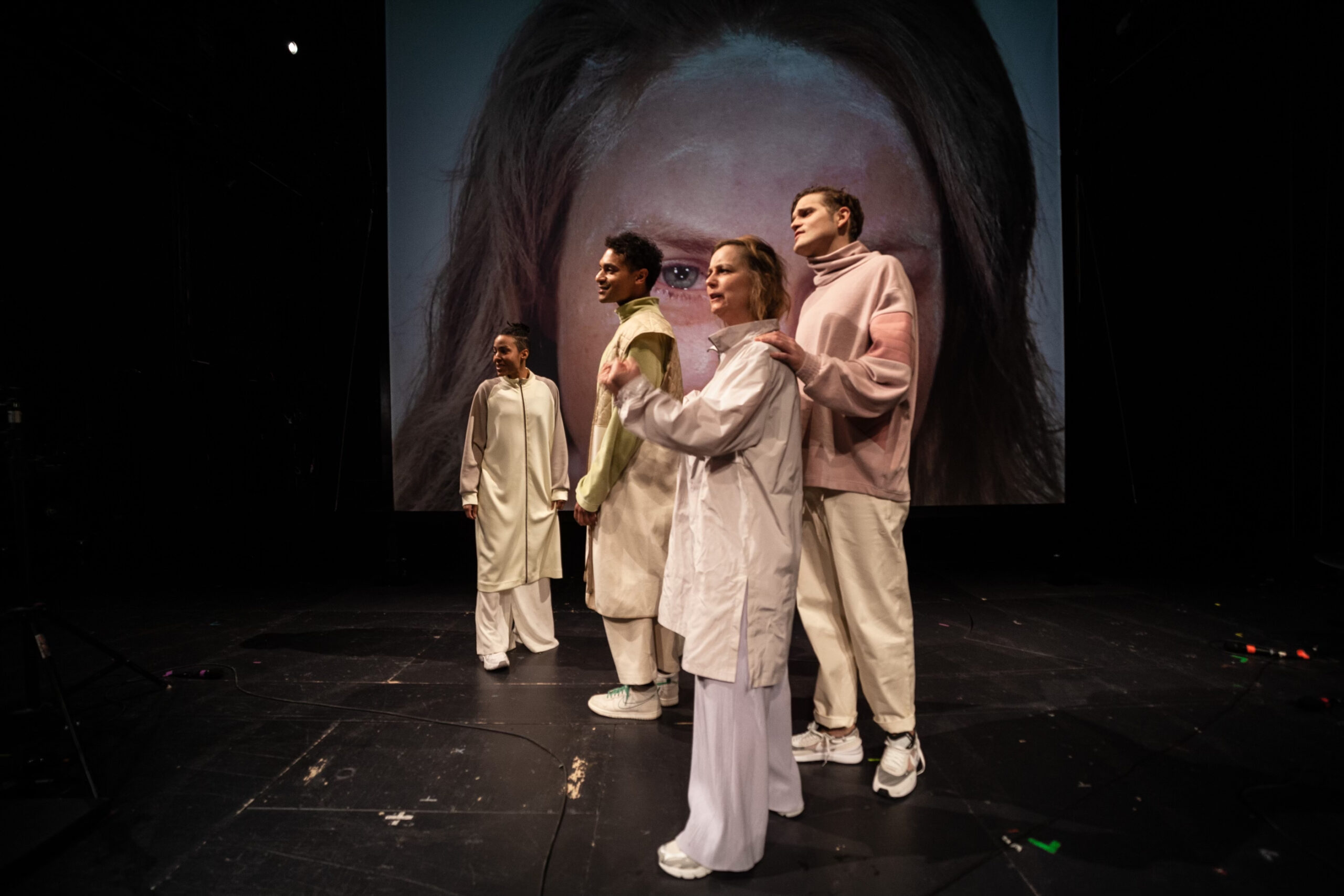
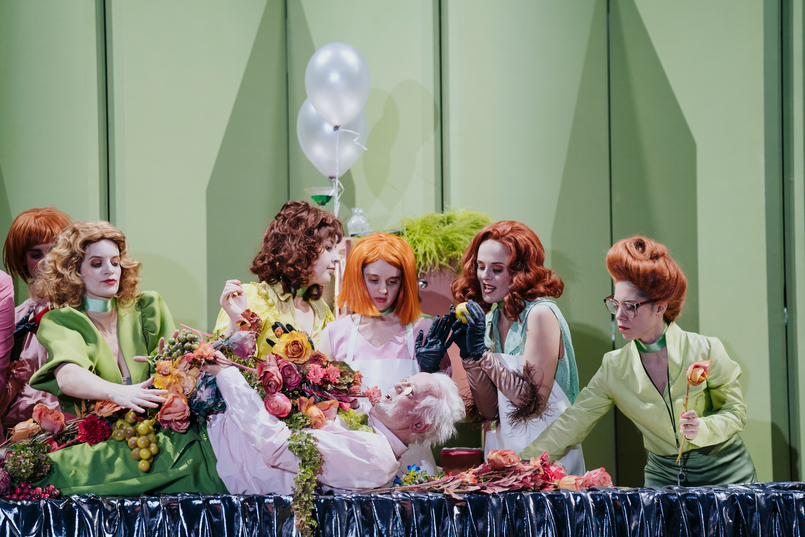
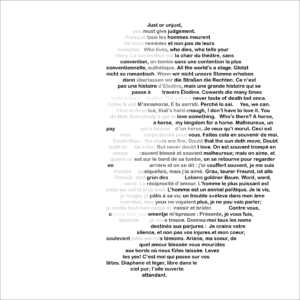
    British writer Sarah Kane described her work as a “depiction of hell.” Each of her five plays is filled with extreme scenes and lines. In this 1998 play Desire, actors Maja Beckmann, Benjamin Lillie, Sasha Melroch, and Steven Sowah speak fragmented short phrases offstage with four voices, overlapping and interweaving like Zaha Hadid’s postmodern architecture, filling the entire space.

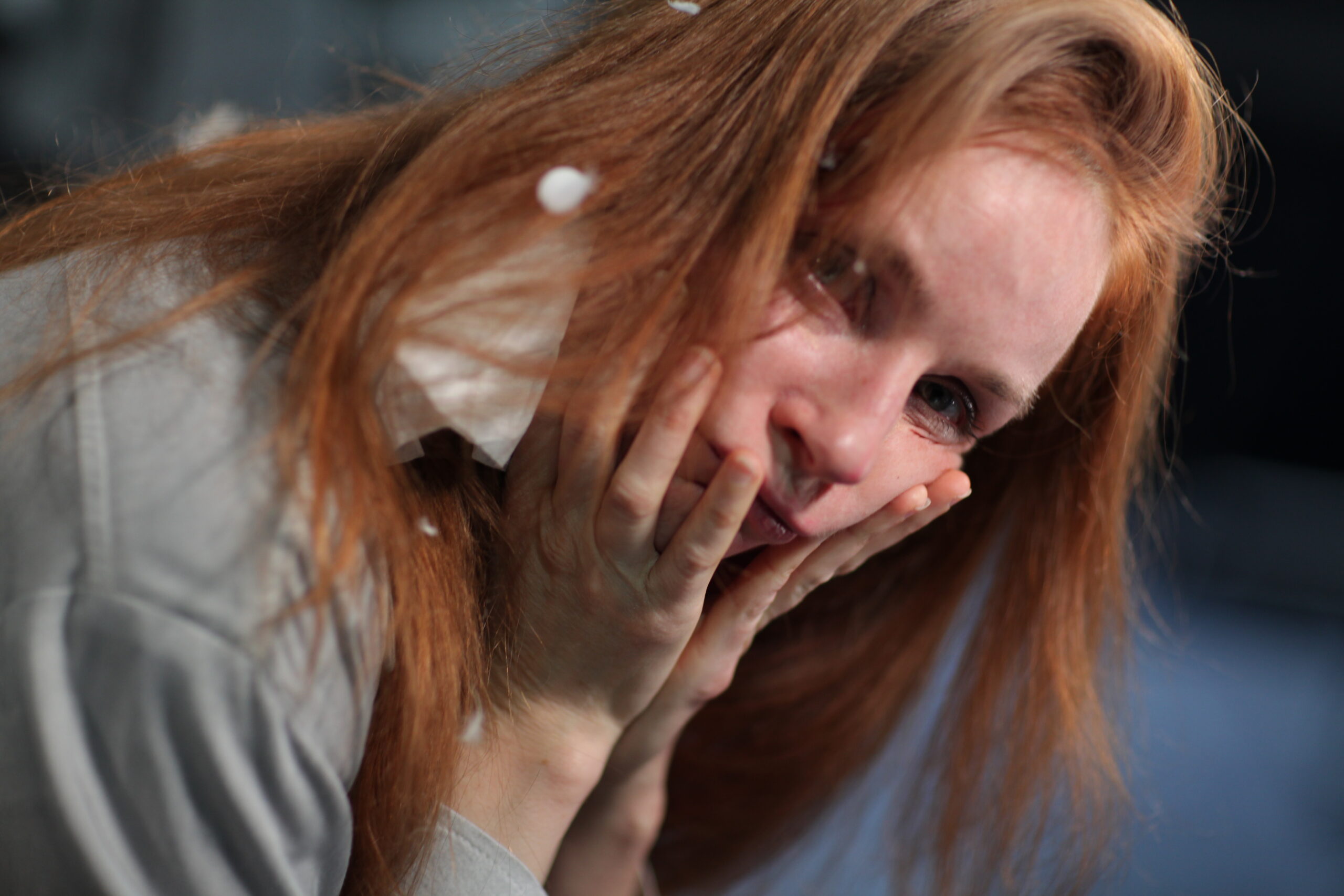
    Wiebke Mollenhauer sits on stage, her face projected hundreds of times larger at the center of the stage. At this moment, our focus is no longer on the characters’ backgrounds or the motives of each line, but on how the words affect our inner feelings when we hear them. What comes to mind when we think of the word “love”? Most likely, it is a person’s face—perhaps our current lover or someone from a “past” in our lives. Facial expressions are the window through which we unconsciously interact with others. In this play, Wiebke’s magnified expressions, paired with the lines, evoke the waves stirred in our hearts by the protagonist’s story.

    In Sarah Kane’s poetic text, fragments of conversation repeatedly appear, interspersed with commentary and associations related to the dialogue. These words are both harsh and tender. Childhood sexual trauma, the longing to be loved, relationships with parents, fantasies about intimacy, and fear of death. None of the lines spoken by the four voices is complete, but much like our memories, these flashing fragments gradually construct our recollections of the past. It is these memories that reveal the deepest imprint the traumas have left on us—a longing for security. But when the security we seek finally arrives, can we truly place all our hopes upon it? One heartbreak after another has gradually taught us that relying only on ourselves is the most reliable strategy. Yet, in the stillness of night, we still yearn for a love to which we can wholly surrender ourselves.

    In the performance, the story unfolds from childhood physical abuse, through the confusion of adolescence, to eventual self-realization. Without uttering a single line, Wiebke uses only her expressions to masterfully toy with the emotions of the entire audience. What expression do you have when your grandfather, sitting next to you, exposes himself and the still-child you respond? What expression when, as a teenager, a stranger forces you to straddle him? What expression when you decide to completely abandon yourself, seducing every man who meets your gaze in a bar? Numbness? Crying? Or laughing out loud? Usually somewhat wooden on stage, Wiebke’s mesmerizing control of her facial expressions demonstrates acting at its peak. Compared with her, the usual leads Maja and Benjamin are completely overshadowed. She doesn’t say a word the entire evening, yet with her face and the text flowing alongside, she conveys surprise, sadness, anger, annoyance, excitement, pain, and fear. No one dares to look away from this brilliant acting at any moment. As the performance gradually draws to a quiet close, Wiebke, also the author Kane, and every one of us sitting in the audience, burst out of the theater, breaking free from the shackles that bind us and finally rush toward freedom and liberation. When the audience sees our souls finally find freedom, many are moved to tears; yet the author who depicted this freedom ended her own life a year after completing this work, escaping from the hell she described.

    Kane’s text is complex, like a difficult long poem, but Rüping always manages to simplify the incomprehensible. In this play, the only thing the audience truly needs to “read” is Wiebke’s expression; the lines serve merely as reading aids. The stage design recalls Rimini Protokoll’s All Right, Good Night, also featuring a large screen in the center with thousands of lines continuously scrolling, contrasted with the actor’s complex facial expressions. Naturally, it is easier for the audience to “read” the latter. As the audience’s eyes remain fixed on the twenty-square-meter giant screen on stage, the brilliant director Rüping also selects a quartet, electronic music, pop songs, and various styles for the music, constantly switching styles within a segment of lines. The seemingly mismatched music strangely always manages to elevate the emotions to a peak. Accompanied by the music’s final movement, the scene is second only to the director’s earlier work Dionysus City’s final rising sun in terms of unforgettable impact.

    Photo: ©Orpheas Emirzas

    10/10 (Predicted Best of the Year)

    German Difficulty: 2/5 (English subtitles)

    Desire

    by Sarah Kane

    German translation by Marius von Mayenburg

    Directed by: Christopher Rüping, Set Design: Jonathan Mertz, Costume Design: Lene Schwind, Music: Christoph Hart, String Trio: Jonathan Heck, Coen Strouken, Polina Niederhauser, Video: Emma Lou Herrmann, Live Video: Wilf Speller, Lighting: Gerhard Patzelt, Dramaturgy: Moritz Frischkorn.

    Cast: Benjamin Lillie, Maja Beckmann, Sasha Melroch, Wiebke Mollenhauer, Steven Sowah.

    Premiere on March 4, 2023

    Duration: 1 hour 50 minutes, no intermission

    www.schauspielhaus.ch


  • Zwiegespräch (Dialogue)

    Zwiegespräch (Dialogue)

    Zwiegespräch (Dialogue)

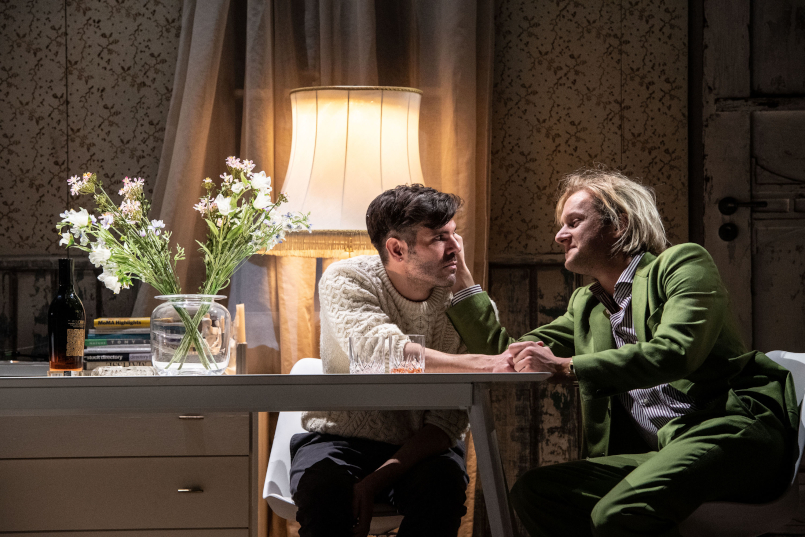
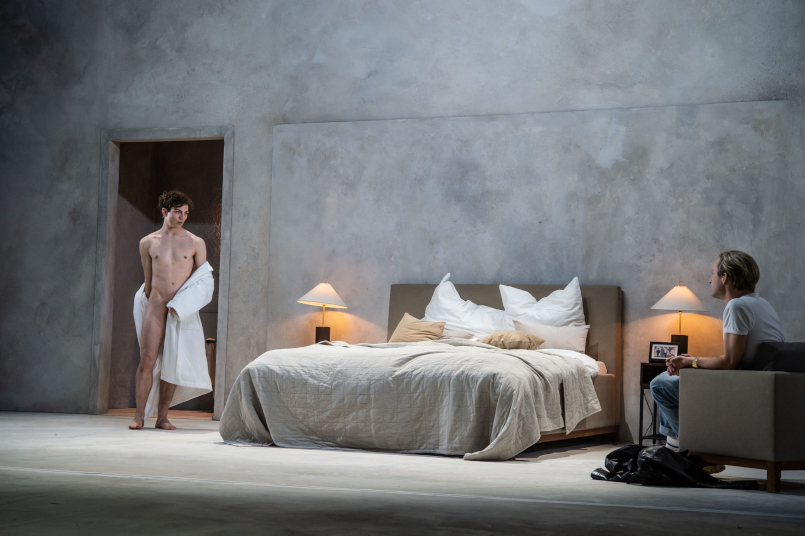
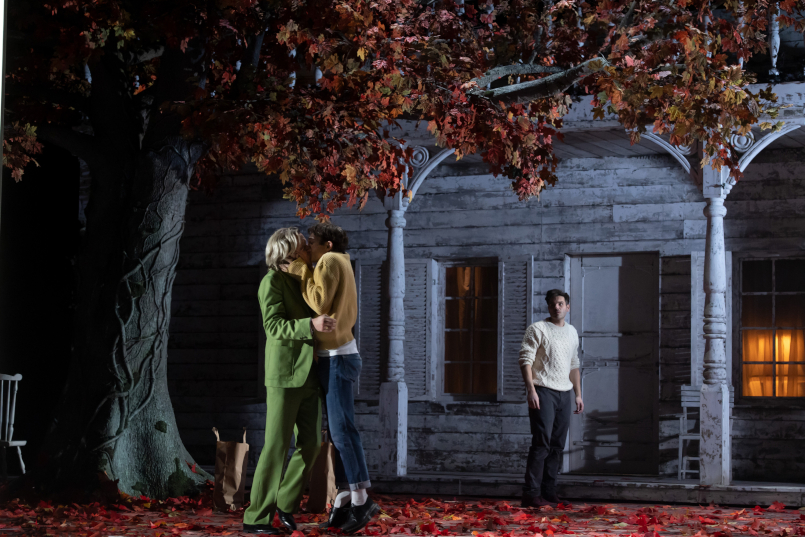
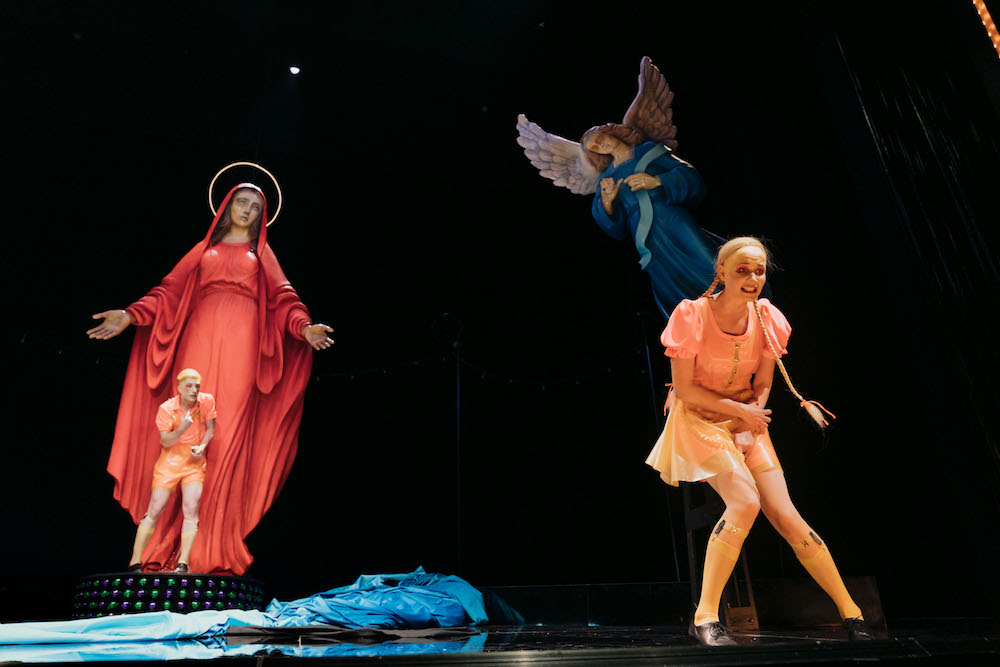
    With half the seats in the audience empty, ridiculously small legroom, coming to see a play in Austria for the first time clearly felt a different atmosphere compared to Germany. Peter Handke’s new book Dialogue was also brought to the stage of Vienna’s Burgtheater by a new-generation director Rieke Süßkow just two days after Handke celebrated his 80th birthday.

    Without fixed roles or instructions for the actors, Handke’s new book is less of a script and more like a dramatically charged prose poem. What moves readers is not the content of the text, but the atmosphere and sadness hidden between the lines. In Handke’s previous work Zdeněk Adamec, the protagonist is a young person disillusioned with the world who chooses to self-immolate in a square in Prague at the point of utter despair. This section of Dialogue tells of the opposite extreme: an elderly person facing the end of life, full of reluctance and helplessness about the imminent end of the journey.

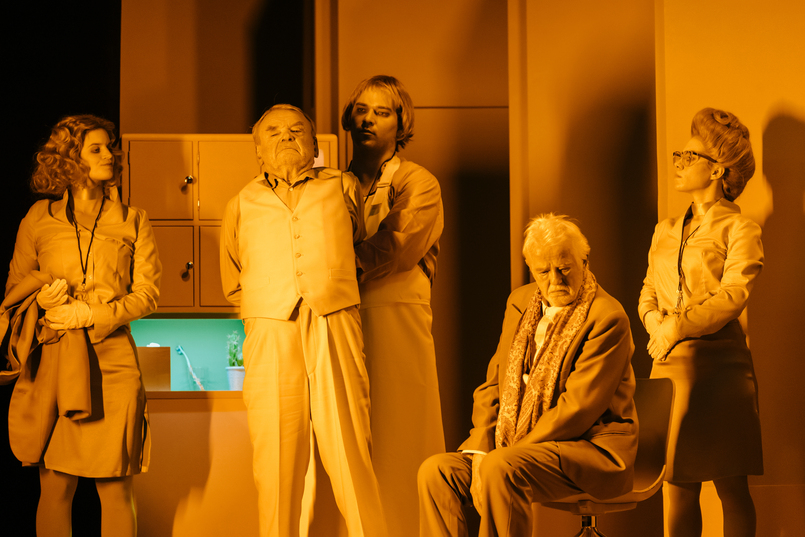
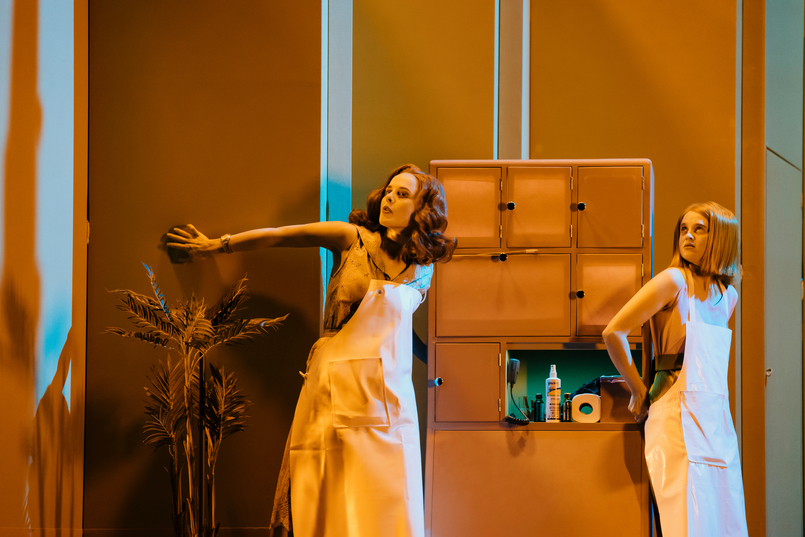
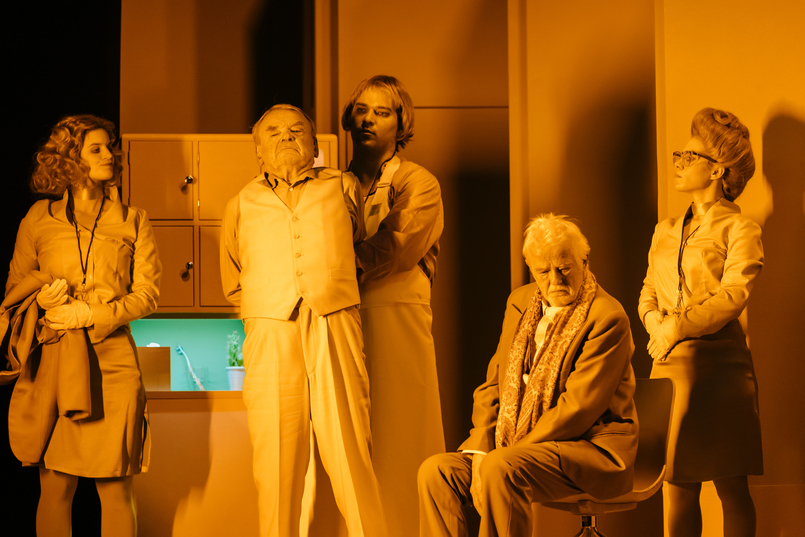
    In Süßkow’s version, the stage is split in two. On one side, an elderly person in a nursing home recounts their youth; on the other, young nurses perform casual care for the elderly. Whenever the nurses sing “La Paloma,” the elderly play a game of musical chairs, and the loser must hand over all personal belongings and is forced off the stage. Staging such a scene on this stage inevitably recalls the “nurse murders” incident that happened in Vienna in the 1980s—bizarre music, twisted body movements, and suddenly halted rhythms completely replicate the style of season two of American Horror Story.

    When facing Handke’s type of text—where “mood outweighs content”—it is crucial for the dramaturge to thoroughly digest and break down the text, then recreate it with their own unique poetry and flair. But every dramaturge approaches Handke’s works with a measure of reverence and cautiousness. This play is no different; the director has done their best to separate the original text and their own unique stage presentation, also weaving in their new-generation understanding of death. However, much of Handke’s powerful text remains preserved, leaving the audience with a discomforting sense of division, as if watching two completely different shows on two TVs simultaneously.

    If we separate the two incompatible parts, firstly the text: Handke’s prose poem-like language, though barely conveyable through the excellent performances of the actors, remains too difficult for foreign audiences. Even the three experienced actors were repeatedly prompted on their lines on stage. One can imagine that even translating this text into English would be a heavy burden for non-native speakers. On the other hand, the director’s command of the stage elements is refreshingly impressive. Even if it seems she doesn’t fully grasp Handke’s work, her interpretation of “transmitting German drama” is skillful to the point of ease. The highly saturated contrasting stage lighting, the sudden start of techno music, the actors collectively going mad—all show that the director has given her utmost effort. As a multiple award-winning company in Austria’s top tier Burgtheater, the actors’ skills are equally astonishing. Whether it’s the seasoned xxx or the young actors around thirty, their acting could serve as headliners in theaters I often visit. For readers in Germany who don’t mind the trip to Vienna, this theater likely holds many surprises.

    Selected among the top ten at the 2023 Berlin Theater Festival, it perhaps didn’t reach the top 10 level across the German-speaking region for me, but for audiences going to Berlin in May, especially those who rarely encounter German theater, I still highly recommend experiencing this play to feel what the author loves about the “indispensable elements of German theater” lol.

    7/10

    German difficulty: 5

    Zwiegespräch

    by Peter Handke

    Directed by: Rieke Süßkow, Stage Design: Mirjam Stängl, Costumes: Marlen Duken, Music: Max Windisch-Spoerk, Lighting: Marcus Loran, Choreography: Daniela Mühlbauer, Dramaturgy: Sandra Küpper.

    Cast: Hans Dieter Knebel, Elisa Plüss, Maresi Riegner, Branko Samarovski, Martin Schwab. Also Sara Abci, Nikolas Altmann, Katharina Franzel, Kolja Gerstmann, Hannah Lou Harrison, Katharina Hochreiter, Karla Howorka, Marko Jovanovic, Willfried Kovárnik, Edmund Lobinger, Hannah Pichler, Maximilian Schwertführer, Sara Siedlecka, Felix Von Gässler, Julia Carina Wachsmann, Brigitte Weinberger and Adam Hadj Mabrouk, Thomas Kern, Levi Powell.

    World premiere on December 8, 2022

    Duration: 1 hour 50 minutes, no intermission

    www.burgtheater.at

  • Count Audland

    Count Öderland

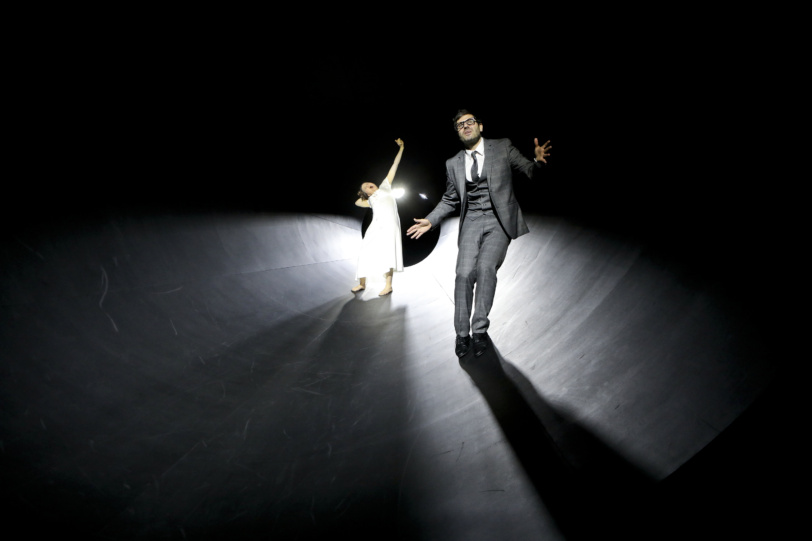
    A huge trumpet-shaped stage faces the audience, where on a gigantic slope people confuse dreams with reality, disrupting the continuous flow of time and reflecting on class contradictions.

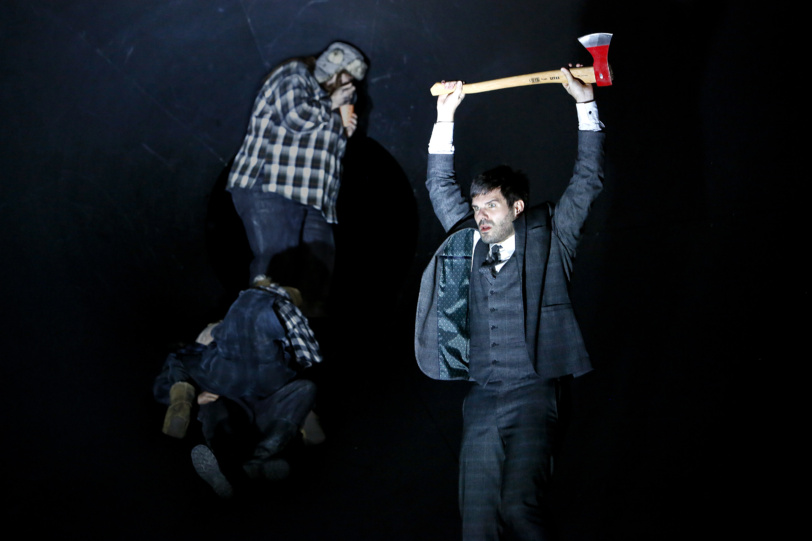
    Count Öderland (Graf Öderland) tells the story of a bank clerk who kills a guard with an axe, which seems to be a senseless murder. Only the prosecutor shows sympathy for the crime and is inspired by it to break through conventional life. From then on, he follows the legend of Count Öderland, wandering the countryside with an axe, killing all those who oppose his claims of freedom. Under Count Öderland’s leadership, followers unite, and the prosecutor’s personal actions develop into a widespread uprising. In the end, the rebellion causes political turmoil, but the freedom the prosecutor desires is never realized.

    v.l. Mario Fuchs, Linda Blümchen, Julius Schröder, Thiemo Strutzenberger © Birgit Hupfeld


    The original work consists of 12 chapters. Each chapter moves forward on the timeline, but they are not entirely coherent, using a montage-style transition. In Bachmann’s stage adaptation, the montage is preserved, but the chronological order is adjusted. Without affecting the narrative, flashbacks are interspersed from time to time. The entire 12-chapter structure is like twelve fingers intertwined, blending very well.

    One of the most important themes of this play is dreams and reality. The prosecutor enters a dream state from the moment he kills the first person in the forest cabin, but upon waking at the end, he finds everything that happened in the dream was actually real. Whether as a reader or audience member, encountering this interplay between dreams and reality induces the same confusion as the protagonist. The most brilliant part of the entire play is that it does not treat dreams and reality as opposites, but rather lets fantasy become reality and reality remain fantasy. This, in fact, is the essence of drama. Watching normally, one feels the director perfectly fulfills the original author Max Frisch’s description of the stage: “Terrifying, but unreal.”

    v.l. Barbara Horvath, Linda Blümchen, Thiemo Strutzenberger, Moritz von Treuenfels, Simon Zagermann © Birgit Hupfeld


    Director Stefan Bachmann comes from an opera directing background, and this version of Count Öderland bears many operatic influences. Before the performance starts, the first to appear is a small ensemble composed of piano, violin, clarinet, and bass, who provide sound effects throughout the performance. Singing segments are also inserted during the show. The most exciting moment is when the rebels of Öderland hammer their axes into the stage floor, and the live band begins performing rock music in the style of Rammstein. Various forms of music on stage are not unfamiliar to those accustomed to German theater, but Bachmann’s use of music is more skilled and effortless than most. Now serving as the director of the Cologne Theater, Bachmann is a director worth paying close attention to in the future.

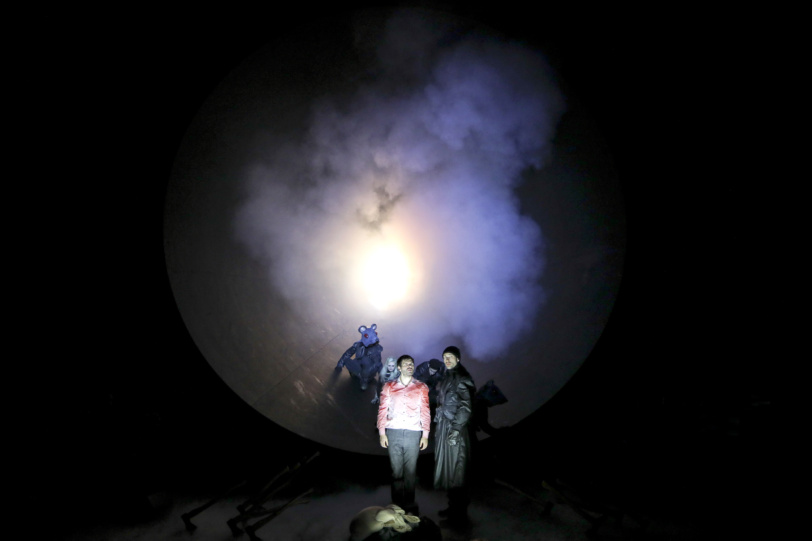
    Of course, the stage design by Olaf Altmann is also the centerpiece of the entire performance. The trumpet-shaped giant stage with a steeply sloped floor on one hand reflects the distortions of objects in dreams, and on the other hand causes characters standing in different positions to appear distorted in size due to perspective.

    v.l. Barbara Horvath, Thiemo Strutzenberger © Birgit Hupfeld


    Max Frisch wrote three versions of this work in total, none of which were well-liked. The second version was even forced to be revised because it was believed to be an allegory of the Nazis’ rise to power. Finally, over seventy years later, under the director’s brilliant touch, this work was listed among the top ten at the 2021 Berlin Theater Festival.

    9/10

  • Year-end Summary 2020

    Year-End Summary 2020

    Ah, 2020 with no plays to watch…

    Originally, I expected to watch at least 50 plays in the first half of this year in Berlin, especially the FIND Theater Festival at the Schlosspark Theater in late March, plus the Berlin Theater Festival in May. Such a trip would have been the most enjoyable half year of my theater-watching career. Unfortunately…

    In summer, the pandemic improved somewhat, and I managed to catch Susanne Kennedy’s “Oracle” in Munich by seizing every opportunity. I also saw “Vacuum Cleaner,” selected for this year’s Berlin Theater Festival, and made three trips back to Berlin to watch two ballets and three plays. The ballets were special performances by the Berlin company prepared during the pandemic: “From Berlin with Love”. The three plays were the new work “Zdeněk Adamec” by Nobel laureate Peter Handke staged at the Deutsches Theater, plus two solo shows at Schlosspark Theater — Lars Edinger starring in “Peer Gynt” and Milo Rau’s “Everywoman.” Afterwards, I went to Switzerland, the toughest country in Europe regarding restrictions, to watch Rüping’s new work “Just at the End of the World.”

    Traveling around, almost every time I finished watching a show there was a lockdown. Two days after watching a show on March 9, Germany officially entered lockdown. After finishing shows in Berlin on October 28, the second lockdown began. The stubborn Zurich closed theaters three days after I returned…

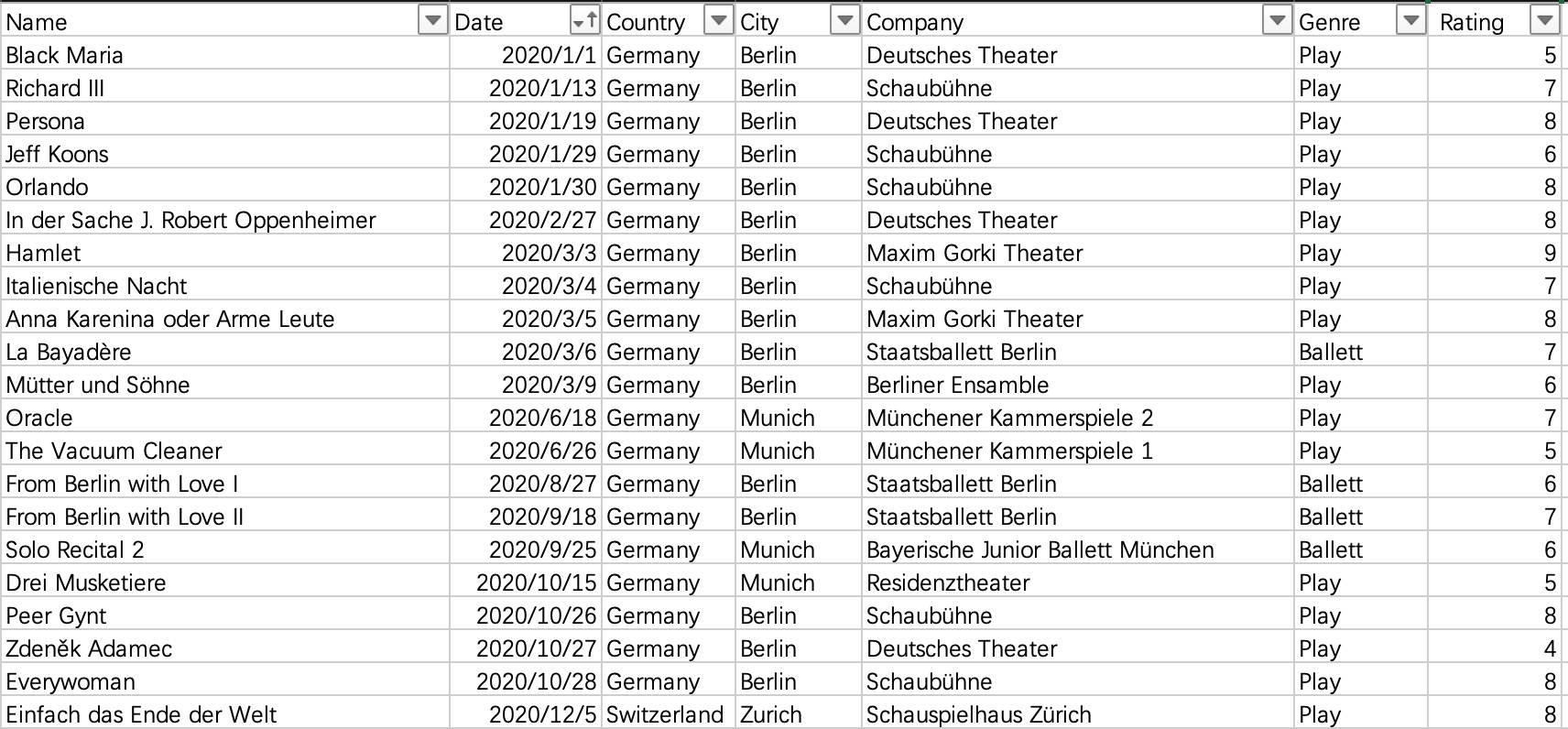
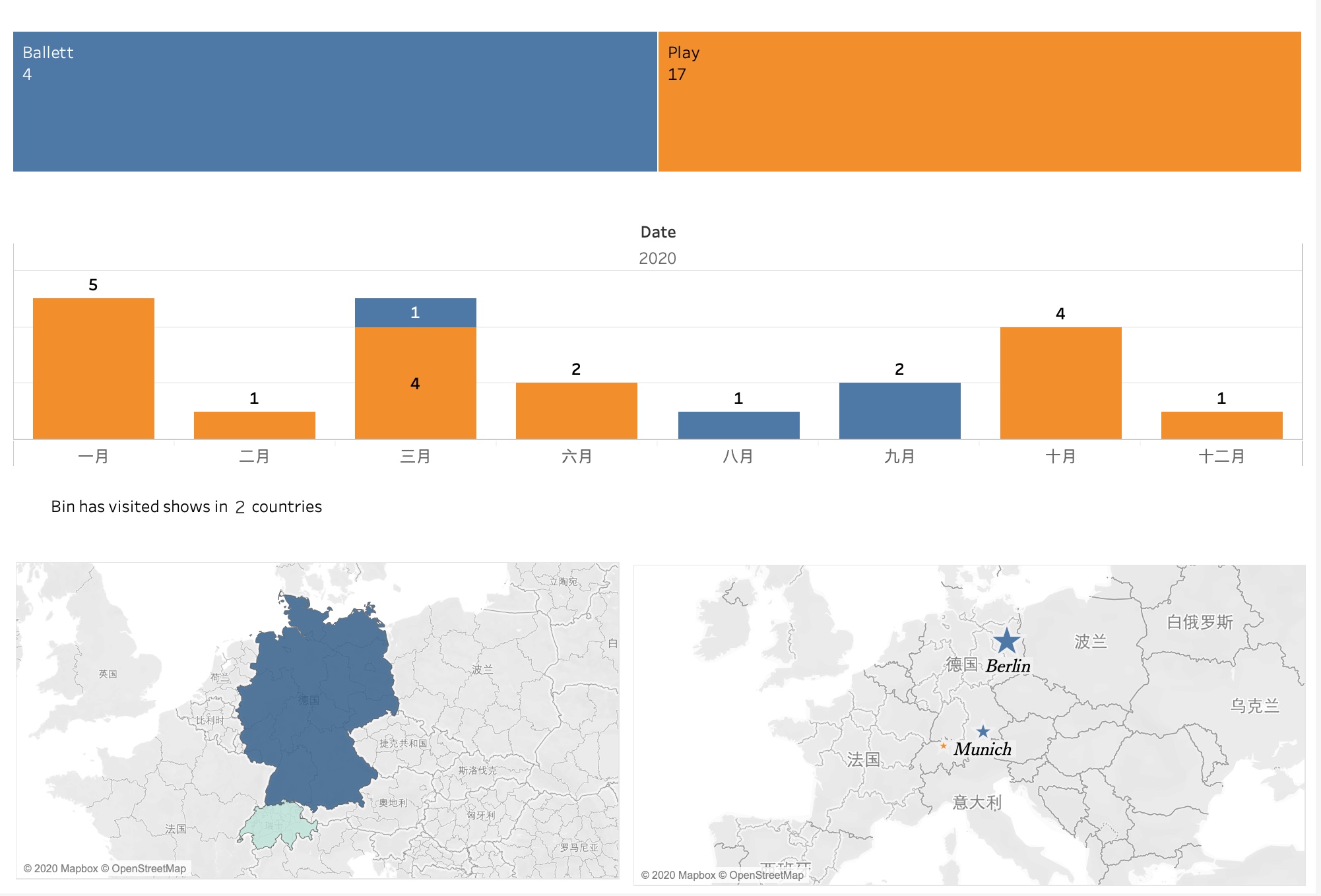
    I saw 21 performances throughout the year, and watched over a dozen plays sporadically online, but really couldn’t find much interest.


    The best of the year was admittedly a bit weak. Surprisingly, the highest score I found was the “Hamlet” (9 points) I watched at the Grips Theater in Berlin at the beginning of the year. The format was super innovative, and every detail opened my eyes. After the pandemic, they also released an online version. Comparing it to the many 10-point plays I watched last year is really…


    Since I couldn’t enter theaters, I had to stay home and read books. I read a Chinese script of “A Doll’s House” and a bunch of miscellaneous foreign books related to theater.

    “Ferryman” is a play I saw on Broadway in 2018, and it was also the Best Play at the Tony Awards that year. Revisiting the script, the plot still remains vivid in my mind.

    “Theatermusik” is a book by a professor at a neighboring school; a book review can be found here.

    “Razzle Dazzle” is written by Michael Riedel, a theater columnist for the New York Post, chronicling the rise and fall of Broadway from the 1960s to the early 21st century. It’s also a chronicle of the theater giant Shubert Organization (Why called a giant? See how many theaters they own in New York…)

    Well… outlook for next year: watch plays when there are plays, read books when there aren’t.

  • The Peak of Public Opinion in Female Stand-Up Comedy – “London Life,” Yang Li, Ali Wong, and Norah

    The Peak of Public Opinion in Female Stand-Up Comedy – “London Life,” Yang Li, Ali Wong, and Norah

    Female Stand-Up Comedy at the Pinnacle of Public Opinion – “London Life,” Yang Li, Ali Wong, and Norah

    Whenever I see “comedy” at the theater, I want to run away

    Having watched countless plays, the number of times I can count as true comedy performances on one hand is very few. Most of the time, it’s clear that actors are trying to be funny but fail, resulting in awkwardness both on and off stage. On another level, even if sitting next to the audience, whether it’s true comedy or not, sometimes viewers can laugh at moments the director planted as bitter humor in tragedies. Whenever this happens, as someone immersed in the plot, I feel helpless and disappointed for them.

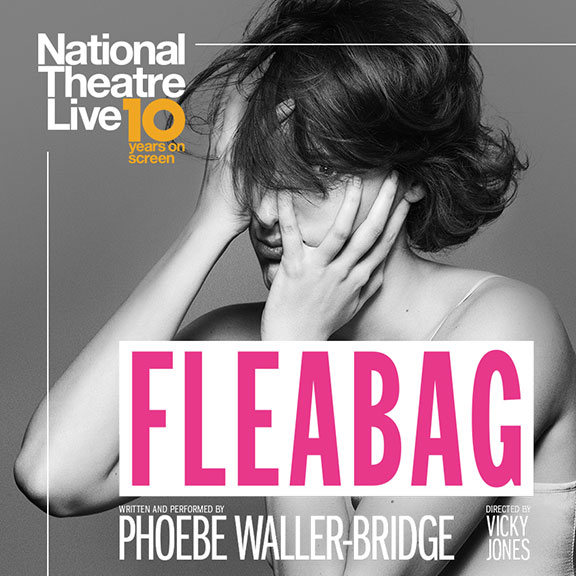
    London Life, Phoebe

    I’ve watched dozens of NT Live performances, and “London Life” is the only one that I had access to but didn’t want to add to my collection. When I first saw the unanimous praise online, I was excited, but after watching it, I was filled with questions. Unlike “Hangman,” which had a strong accent, I understood most of the references here, but still couldn’t figure out what was actually funny. A year and a half later, wanting to write a review, I tried watching again but 15 minutes was really all I could tolerate. Below are all the laugh points from those 15 minutes by the live audience—I didn’t laugh once; instead, the longer I watched, the more serious my expression grew. This is a show I would definitely leave midway through:

      1. Trying to take off the jacket because it’s too hot at the start of the interview
      2. Telling the interviewer, “I’m not trying to sleep with you, look at yourself”
      3. “I ordered a slutty Pizza, the bitch was dripping” — a pun
      4. “I wish the banker could come on me for 10K pounds”
      5. “Zack Efron is a good actor,” “Obama is attractive”
      6. Saying goodnight to boyfriend by the bed after watching porn
      7. Handprints on the wall left during a threesome on her period
      8. Threesome was great
      9. “I spent half an hour doing makeup and it ends up amazing”
      10. “I dress like a slut but can go home and change; the man passing by has a body full of fat he can’t take off at home”

    Among these 10 “laugh points,” there is physical acting, personification, bold descriptions of her sexual fantasies and experiences, as well as body shaming of men. Since this is performed in a theater for effect, naturally it cannot be judged by social norms outside. But what I strongly resent is that except for point 6 with a hidden joke, the rest are very blunt, like an unfiltered emotional outburst. As a male audience member, I was not insulted because of the “male” identity, but rather felt that my “audience” identity was insulted—paying for a ticket only to be force-fed unprocessed garbage.

    In our last podcast episode “Three Sisters”: Why Is a Boring Play Performed Year after Year?, a senior mentioned the concept of “low comedy”: it refers to a dramatic or literary form of popular entertainment with no major objectives besides generating laughter through boasting, loud jokes, drunkenness, swearing, fighting, slapstick, and other rambunctious activities [Encyclopædia Britannica]. “London Life” is a typical low comedy. Low comedy is not appreciated by most of society and looked down upon compared to high comedy. The sole purpose of low comedy is to evoke laughter. Because most forms of low comedy lack any contextual information, they have not earned high respect [B. A. (Jan 21, 1934). “Salute to low comedy”. New York Times.]

    ★★☆☆☆

    Ali Wong, Yang Li, Uncle Roger, and Norah

    As another female low comedy, besides “London Life,” the most popular must be Ali Wong’s Netflix special. Watching their performances elicits similar feelings: “What is this? What’s funny about it? Why is it popular?” The only slight difference might be that Ali Wong, as an Asian woman, leverages Netflix to skyrocket and simultaneously contributes slightly to breaking American Asian stereotypes. If I were to rate and review, it would also be a fail.

    Yang Li, whom I first knew because of her “ordinary yet confident” meme—so good that even someone like me with a timeline cleanliness obsession follows her heavily ad-ridden Weibo. She drops that punchline within the first minute, which felt a bit lacking in buildup at first, but then follows it up with jokes about a dumb person scoring 40 points and “rational women won’t come after you,” making the first three minutes well-structured and surprising. Returning to the most viral recent “Men Have No Bottom Line” video, similarly, no laughs in the first three minutes; it even had “You male viewers are really hard to please” type comments. It makes one wonder if this is just setup for later jokes or genuine complaint? Calling it stand-up, why does it look like a celebrity interview post-fame?

    Another breakout star who rose to fame by reviewing egg fried rice is Uncle Roger. Though not female, he has seriously been led by capital every step of the way. His channel has many videos of Nigel Ng’s live performances as himself, and nearly 100 podcast episodes of “Rice to Meet You.” With various racial jokes, cultural clash bits, audience interactions, and podcast spontaneity, they are top-tier. But since the egg fried rice video made him three million subscribers, he keeps recycling the same old Uncle Roger stereotypical Asian uncle skit. It’s annoying enough to make me unsubscribe, but I’m still glad talented people can make money.

    So who’s actually good?


    Norah, don’t ask, just search!
    In the show “So-so” with those four foreigners, Norah was purely awkward acting, but who would have thought years later she blossomed so impressively! Apart from the Rainbow Chorus, she’s the Shanghai performer I most want to see!

  • “The Three Sisters”: Why Is a Boring Play Performed Every Year?

    “The Three Sisters”: Why Is a Boring Play Performed Every Year?

    “Three Sisters”: Why is a Boring Play Performed Year After Year?

    “Moon Never Sets on Theater” A cultural and artistic podcast jointly produced by theater practitioners spanning three continents and five time zones

    Guests This Episode 

    “TheatreManiac” Sun Bin

    “Slothful Body” San Feng

    “@ph Senior” ph Senior

    “Archipel Islands” Aperture

     Listening Guide 

     01’30” Summary of the story of Three Sisters

    03’40” Is “Three Sisters” really boring?

    08’25” Static Drama and Fragmented Drama

    17’20” Did Chekhov consider this a comedy?

     24’30” Munich Kammerspiele Susanna Kennedy’s Posthuman Version of “Three Sisters”

    35’05” Lin Zhaohua’s Version of “Three Sisters – Waiting for Godot”

     Photo and Text Index 

    Trailer of Munich Kammerspiele’s “Three Sisters”

    Production Stills

    Production still from “Three Sisters – Waiting for Godot”

     Other Recommendations 

    As a play that is performed almost every year with multiple shows, “Three Sisters” can be watched through many online channels. Besides the two versions introduced in this episode, the Inua Ellams version by the UK’s National Theater is highly recommended. This production can be viewed on the recently launched NT streaming service, NT at Home.

    – Find   Us  –

  • From Berlin with Love (Gala I&II)

    From Berlin with Love (Gala I&II)

    From Berlin with Love (Gala I&II)

    Ballet galas are often the highlight of an entire dance company’s season. More than half of the galas I’ve seen in the past were commemorative or celebratory events, such as the retirement of a director who had served for decades, or a principal dancer inviting friends to perform together.At galas, not only are many famous dances, rare works, or brand-new pieces presented, but the performers are usually the world’s top principals, showing off dazzling skills on stage, making for an exceptionally exciting experience.

    Berlin’s theaters have been closed for five and a half months. Besides the Corona pandemic, there was the early-year upheaval when the two directors, Sasha Waltz and Johannes Öhman, left the company ahead of schedule. During such a chaotic period, fortunately the dancers didn’t stay idle at home; soon after the pandemic started, they received practice floors delivered from the company, making their home office anything but peaceful (tongue-in-cheek).

    © Britta Pedersen

    As the opening performance of this season, the 1800-seat theater only opened over 400 seats. I originally thought Berliners, having been cooped up for half a year, would rush to grab tickets, but it turned out there were far fewer attendees than expected. It seems the older ballet-loving crowd is more afraid of the virus than the younger generation.

    I

    The opening “Pas de Quatre” is a classic ballet choreographed by master Jules Perrot. Its premiere in 1845 caused a great stir in England, as the audience had never seen a ballet where the four top dancers performed together on one stage. This version is adapted by Anton Dolin based on the original, and the four dancers on stage were none other than Berlin’s four principals: Iana Salenko, Yolanda Correa, Elisa Carrillo Cabrera, and Ksenia Ovsyanick.

    © Yan Revazov

    The main reason for coming to Berlin was still to see Polina Semionova. The goddess performed “Cinque,” choreographed by Mauro Bigonzetti. Accompanied by Vivaldi’s opera “Stabat Mater dolorosa,” Polina seemed to be trying to mask her deep sadness, searching for a way out. Under today’s difficult circumstances, this performance held even more profound meaning.

    © Jack Devant

    One piece in the second half was a segment from “M-Dao” choreographed by dancer Wang Yabin for the English National Ballet (ENB). Accompanied by cello music, principal Ksenia Ovsyanick, clad in a long dress, showcased the beauty of the body to the fullest extent.

    © Jack Devant

    The final piece was a male version of “Variations for Four.” Two principals, Daniil Simkin and Dinu Tamazlacaru, paired with two corps de ballet groups, donned cloaks on stage, resembling a male troupe from the Don Quixote era. Usually, the finale is full of showy technical skills; however, although there was technique on display, it was not flashy. Tamazlacaru’s Barrel Roll had height but his body was somewhat stiff, while Simkin’s execution of the same move even suggested he was a recently recruited dancer. Every time I see him, I have to lower my expectations for him further.

    © Yan Revazov


    II

    The Berlin company aimed to make “From Berlin with Love” a series under the pandemic. Most of the program for the first gala was modern and contemporary ballet, while the second gala fulfilled the expectations of classical ballet lovers.This time, “Pas de Quatre” opened the show again, but reverted to Jules Perrot’s original version. Among the four dancers, there was one principal, two soloists, and one demi-soloist. Each gave a commendable performance, though Aya Okumura from Japan was slightly slow in movement, making her performance less crisp. Overall, this opening well demonstrated Berlin company’s strong capabilities.This Romantic work is very demanding on the dancers’ fundamentals. Every step of the classical ballet technique appears here, from the slow Adagio to the brisk Petite Allegro, to the Grand Allegro which tests the dancers’ jumping abilities. Aside from the ensemble dances at the beginning and end, each dancer had long solo variations that allowed them to fully showcase their unique traits and strengths. The most impressive was soloist Evelina Godunova, tall with long legs, and perfectly executed movements—she seems to be a promising rising star.

    The second piece was a pas de deux selection from “Corsaire,” performed by Berlin company’s two pillars, Iana Salenko and Daniil Simkin. Being pillars means that whenever you come to Berlin, if not specifically to see the goddess Polina, you’ll almost certainly watch these two. However, no matter how many times I’ve watched them dance separately or together, it always feels like their emotional connection is lacking. As principals, their technical skills are unquestionable, but the high standards that come with that seem to hinder their emotional expression during dance. As an audience member, it’s hard to be moved. Daniil is physically too small, and his features give a somewhat androgynous impression, making it hard for him to convey masculine vigor, while Iana, as the leading female principal, fails to project the “royal aura” and seems more like a technically superb member of the corps de ballet than a principal.

    © Yan Revazov

    In “Giselle,” the scene performed was the Act II ghost ensemble. This is my favorite large group dance after the ghost kingdom selection in “La Bayadère.” It features both Giselle’s solo virtuosity and simultaneous performances by dozens of corps dancers. It’s thrilling but also exposes the company’s weaknesses. After all, so many dancers on stage means practically the whole company is mobilized. Throughout Germany, only Berlin raises the corps de ballet standard this high (partly due to numbers—Berlin’s female dancers total 53 including guest star Polina. By comparison, Munich has a relatively large troupe with 37, while the Hamburg company only has 28 female dancers).

    © Yan Revazov

    The second half included several excerpts from “Swan Lake.” As a huge fan of “Swan Lake,” I was extremely excited. The ancient saying goes: “There is no bad ‘Swan Lake’ — only overly picky audiences.” Not enough arm softness? Then just watch the legs. Emotional detachment? Then don’t focus on the face.

    Although I was still bothered that the third act in the first “From Berlin with Love I” switched dancers suddenly, causing me to miss the goddess’s version of “Swan Lake,” I still felt Iana’s version in this gala perfectly showcased the pure beauty of ballet through her appropriately delivered movements. Not only on stage, but the musical arrangement for “Swan Lake” backstage was also superior to others. With the pandemic, ballet companies have all switched to playing recorded music, where the bass sounds muffled in the audience. Only in this show was a live orchestra used, albeit only four musicians in the pit, but the effect was significantly better.

    © Yan Revazov

    After watching these two galas, I felt that the Berlin company’s “From Berlin with Love” series somewhat appeared hastily assembled. Previous galas were filled with stars and high-difficulty moves everywhere, but now it seems more like whoever is available is used, and because of the low attendance, cost concerns are also considered. I look forward to the pandemic’s end so I can return to Berlin and see a full-length ballet performance.These days, Berlin has added “From Berlin with Love III” and “IV,” featuring “Corsaire,” “Swan Lake,” “A Midsummer Night’s Dream,” as well as “Jewels” and several contemporary ballets, catering to various enthusiasts’ tastes. Performances are scheduled for 17 & 18 October and 29, 30 & 31 December. Due to popular demand, a performance of “II” was added on 18 December as well. Remember to buy tickets in advance.

  • Theater Reopens, Munich Welcomes Its First Immersive Drama

    Theater Reopens, Munich Welcomes Its First Immersive Drama

    Theaters Reopen: Munich Welcomes Its First Immersive Theater Production

    “Know thyself” is the inscription on the threshold of the Oracle of Delphi[1] , and it may well be the most important maxim of the ancient world. The oracle’s guidance was often ambiguous and irrefutable. It posed paradoxes to those seeking advice, forcing them to think from another dimension. Created by Susanne Kennedy and Markus Selg, Oracle explores, in an immersive environment, the possibility of coexistence between humans and artificial intelligence. In this world, humanity ceases to be central to identity and instead becomes just one part of a symbiotic relationship with other creatures and intelligent machines.

    After falling in love with director Susanne Kennedy’s production of Three Sisters last year, I had been eagerly anticipating this new play. However, shortly after rehearsals began, the entire production was halted due to COVID-19. For several weeks, the director and actors continued rehearsing via Zoom, which made it possible for a trial version of this play to be presented in June, allowing theater-lovers to return to the stage.

    Upon entering the main area, three actors wearing masks and voice modulators guide you to a stone pillar and introduce themselves as messengers of the gods. The intense gaze of the actors instills a strange fear. As they proceed, they silently slip behind you and whisper, their body language and words expressing curiosity about “you” as a human. This is, in my opinion, the best part of the entire play. The mix of excitement and fear quickly transforms the audience from mere observers into worshippers in a temple. When the actors’ voices are modulated to sound mechanical, audiences familiar with the director are instantly transported back to scenes from Three Sisters.

    © Judith Buss


    However, after the first segment, the following 30 minutes feel somewhat sloppy. Lying on blankets listening to recordings, entering a small dark room to watch strobe lights, or engaging in silent diagonal eye contact with actors in a room — although one can understand the director’s artistic intentions, the execution feels haphazardly assembled. The set relies heavily on curtains rather than solid architectural materials to evoke the feeling of a temple. As you move through the space, you gradually slip back from the immersive experience into the role of a spectator.

    At the center of the temple, there are three opportunities to ask the “god” a question. But whether due to a limited sample or something else, the “god” before me—especially as a materialist—felt like a “synthetic simpleton.” Walking out of the theater, the excitement from the first part lingers, but I did not feel as if I had undergone a spiritual journey.

    © Judith Buss


    This immersive theater piece is similar in form to others, but compared to Sleep No More, it lacks the freedom for the audience to explore independently, as actors guide you along a predetermined path. The performance admits one audience member every 6 minutes, taking about 36 minutes to complete one circuit. In a two-hour show, there may be only about 20 spectators in total. I wonder how such a format can be profitable.

    As Munich’s first (?) immersive theater production, it is still worth seeing. Hopefully, the final version will improve.

    7/10

    [1] The Delphic maxims are said to originate from the sacred sayings of the Oracle of Apollo in the Temple of Apollo at Delphi, dating back to the 6th century BCE. They served as a series of moral guidelines for the pre-Socratic Greek peoples, containing much ancient Greek wisdom and teachings on character. The most famous maxim, “Know thyself,” was inscribed above the door of Apollo’s temple. The Delphic maxims advise living a pious life and are teachings bestowed by Apollo upon humanity.

  • What is the Best “Applied Drama” Awarded at the Berlin Theater Festival?

    What is the Best “Applied Drama” Awarded at the Berlin Theater Festival?

    What is the “Applied Theatre” That Won Best at the Berlin Theater Festival?

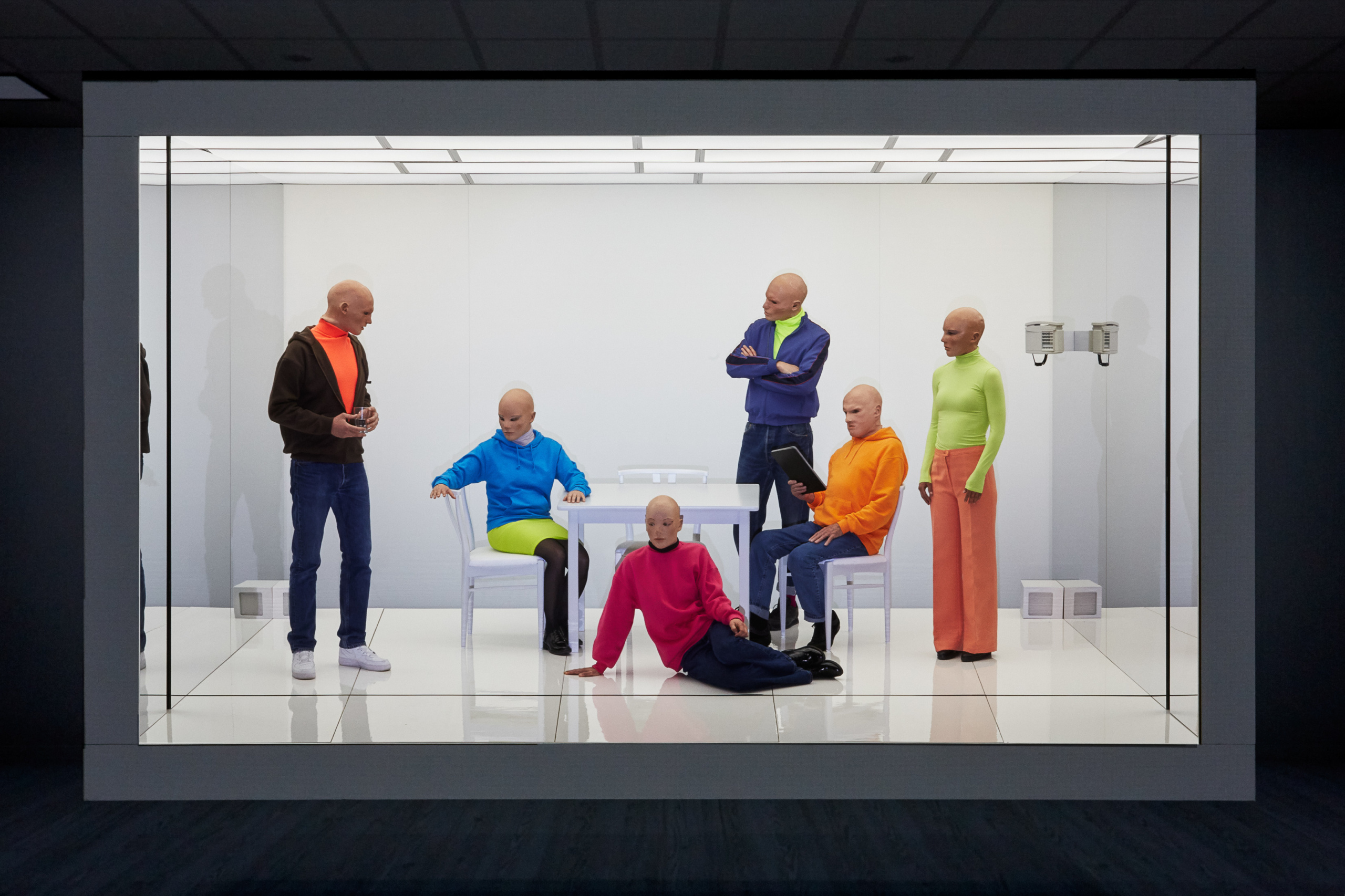
    The penultimate performance at the Berlin Theater Festival has been released. Having already seen the final piece “The Vacuum Cleaner,” I can confidently say that this year’s “Chinchilla Arschloch, waswas” has become my favorite work at this festival.

    Rimini Protokoll is a very famous applied theatre group in Germany. Its three founders were all students in the Applied Theatre Department at Justus Liebig University Giessen. Since its founding in 2000, Rimini has continuously won awards. This year marks their third time being selected among the top ten at the Berlin Theater Festival. When theaters in Germany initially closed due to the pandemic, Rimini put many previously recorded videos online (official website link, free to watch, VPN may be needed). This play is also the only one at this Berlin Theater Festival with a screening time exceeding 24 hours and still available for viewing.

    © Robert Schittko


    Rimini is acclaimed as the founder of “documentary theatre.” Specifically, most of the actors in their plays are non-professionals, referred to as “experts of everyday life,” and the stories told on stage are often the actors’ own stories. The aim is to tear open real life and present its full picture from an extraordinary perspective. So what exactly is “documentary theatre”? And what is “applied theatre”? You can listen to my discussion about “applied theatre” with a theatre PhD based in New York at the end of this article!

    Before watching this “Chinchilla,” I had just seen their previous work “Uncanny Valley.” At first glance, the two pieces are quite similar aside from the different actors and themes. Although “Uncanny Valley” was also invited to perform at the Berlin Theater Festival venue, it did not receive favor from the organizers. Compared to that, today’s “Chinchilla,” even without the “applied” label, remains a very “engaging” theatre work.

    The title “Chinchilla Arschloch, waswas” translates roughly to “Chinchilla asshole, what what?” This absurd name actually comes from the curses uttered involuntarily by people with tic disorder. They uncontrollably make throat-clearing sounds or shrug their shoulders, shake their heads and sway, often accompanied by compulsions and uncontrollable swearing.

    Those with tic disorder do not intentionally or habitually make these movements; their symptoms result from imbalances in dopamine in the brain. Such uncontrollable movements are called “tics,” which naturally match the style of German theatre very well. Even professional actors often display similar behaviors. As a result, in performances by actors with tic disorder, it even feels as if they are highly trained German theatre actors, making the entire performance very natural.

    © Robert Schittko

    Actor Christian Hempel did not want to memorize lines, so at the start he told the audience that one of his conditions for participating was not having to learn lines. The lengthy monologues that followed were read straight from the script. This kind of breaking away from traditional theatre conventions is exactly one of the reasons German theatre is so beloved.

    “Everything in theatre is pre-designed, including accidents.”

    However, the completely uncontrollable “tics” add a new dimension to the theatre. People smoke on stage, go naked, but no one has dared to smoke marijuana on stage; in Germany there have been plays flirting with Nazi themes, but no one had boldly shouted “Heil Hitler” until now. Seeing the actors not only break theatrical boundaries but even “play the illness” by doing things in daily life that are often frowned upon adds a comedic element to this play.

    In “Uncanny Valley,” Rimini designed a game where a high-level quadriplegic patient sitting in a wheelchair navigates a maze. Likewise, in “Chinchilla,” there is a competition segment where two actors with tics compete to see who “tics” first. These gameplay segments are incredibly natural, and watching the uninhibited laughter on stage makes the audience continually reflect on what differences exist between them and us. We all know staring at disabled people is impolite, but Rimini seems to push the notion of “politeness” forward. If we completely accept disabled people as simply different kinds of “normal,” then what is impolite about staring?

    © Robert Schittko

    The final song without any “tic” felt like it had perfectly encapsulated all the beauty of theatre. Yet as soon as the music stopped, Hempel read a letter from his neighbor: “If you curse again in the yard, we will see you in court.” Before entering the theatre, we might have supported the neighbor’s stance, but two hours later, perhaps we all gained a little more understanding and tolerance for people with tic disorder. Isn’t this exactly the role of applied theatre?

    In this episode of “Moon Never Sets Theatre Watch,” I tried to clarify what exactly “applied theatre” is with a senior scholar in New York, you can scan the QR code to follow [Moon Never Sets Theatre Watch], or manually search for it on Ximalaya, Apple Podcasts, and Spotify. You are also welcome to submit your questions, suggestions, expressions of love, or topics you wish to learn about, which might become our next episode’s theme.

    Contents Index

    0’55”   Introduction to Rimini Protokoll

    3’24”   What exactly is applied theatre?

    10’58” Appropriate scenarios for applied theatre

    12’18” What is theatre?

    15’21” Senior scholar’s favorite “prison theatre”

    17’27” Why applied theatre is not very entertaining

    20’08” What does applied theatre have to do with me?

    21’26” PhD senior most wants to be a “domestic worker”

    30’00” Where does Chinese theatre fall short compared to German theatre?