
What is the “Applied Theatre” That Won Best at the Berlin Theater Festival?
The penultimate performance at the Berlin Theater Festival has been released. Having already seen the final piece “The Vacuum Cleaner,” I can confidently say that this year’s “Chinchilla Arschloch, waswas” has become my favorite work at this festival.
Rimini Protokoll is a very famous applied theatre group in Germany. Its three founders were all students in the Applied Theatre Department at Justus Liebig University Giessen. Since its founding in 2000, Rimini has continuously won awards. This year marks their third time being selected among the top ten at the Berlin Theater Festival. When theaters in Germany initially closed due to the pandemic, Rimini put many previously recorded videos online (official website link, free to watch, VPN may be needed). This play is also the only one at this Berlin Theater Festival with a screening time exceeding 24 hours and still available for viewing.
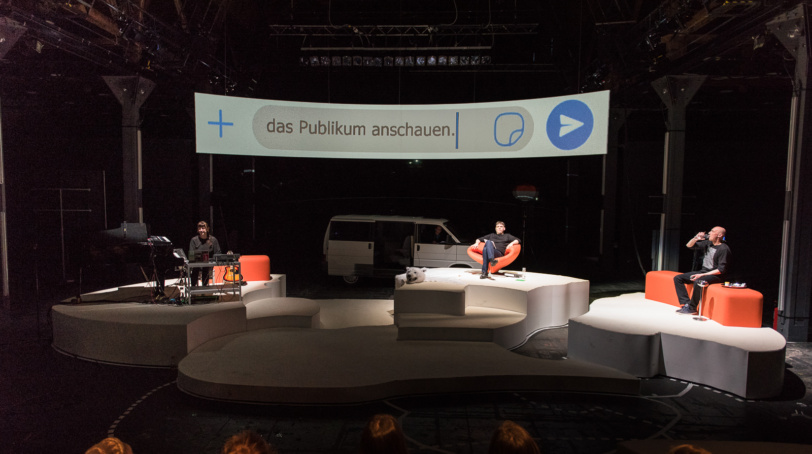
Rimini is acclaimed as the founder of “documentary theatre.” Specifically, most of the actors in their plays are non-professionals, referred to as “experts of everyday life,” and the stories told on stage are often the actors’ own stories. The aim is to tear open real life and present its full picture from an extraordinary perspective. So what exactly is “documentary theatre”? And what is “applied theatre”? You can listen to my discussion about “applied theatre” with a theatre PhD based in New York at the end of this article!
The title “Chinchilla Arschloch, waswas” translates roughly to “Chinchilla asshole, what what?” This absurd name actually comes from the curses uttered involuntarily by people with tic disorder. They uncontrollably make throat-clearing sounds or shrug their shoulders, shake their heads and sway, often accompanied by compulsions and uncontrollable swearing.
Those with tic disorder do not intentionally or habitually make these movements; their symptoms result from imbalances in dopamine in the brain. Such uncontrollable movements are called “tics,” which naturally match the style of German theatre very well. Even professional actors often display similar behaviors. As a result, in performances by actors with tic disorder, it even feels as if they are highly trained German theatre actors, making the entire performance very natural.

Actor Christian Hempel did not want to memorize lines, so at the start he told the audience that one of his conditions for participating was not having to learn lines. The lengthy monologues that followed were read straight from the script. This kind of breaking away from traditional theatre conventions is exactly one of the reasons German theatre is so beloved.
“Everything in theatre is pre-designed, including accidents.”
However, the completely uncontrollable “tics” add a new dimension to the theatre. People smoke on stage, go naked, but no one has dared to smoke marijuana on stage; in Germany there have been plays flirting with Nazi themes, but no one had boldly shouted “Heil Hitler” until now. Seeing the actors not only break theatrical boundaries but even “play the illness” by doing things in daily life that are often frowned upon adds a comedic element to this play.
In “Uncanny Valley,” Rimini designed a game where a high-level quadriplegic patient sitting in a wheelchair navigates a maze. Likewise, in “Chinchilla,” there is a competition segment where two actors with tics compete to see who “tics” first. These gameplay segments are incredibly natural, and watching the uninhibited laughter on stage makes the audience continually reflect on what differences exist between them and us. We all know staring at disabled people is impolite, but Rimini seems to push the notion of “politeness” forward. If we completely accept disabled people as simply different kinds of “normal,” then what is impolite about staring?
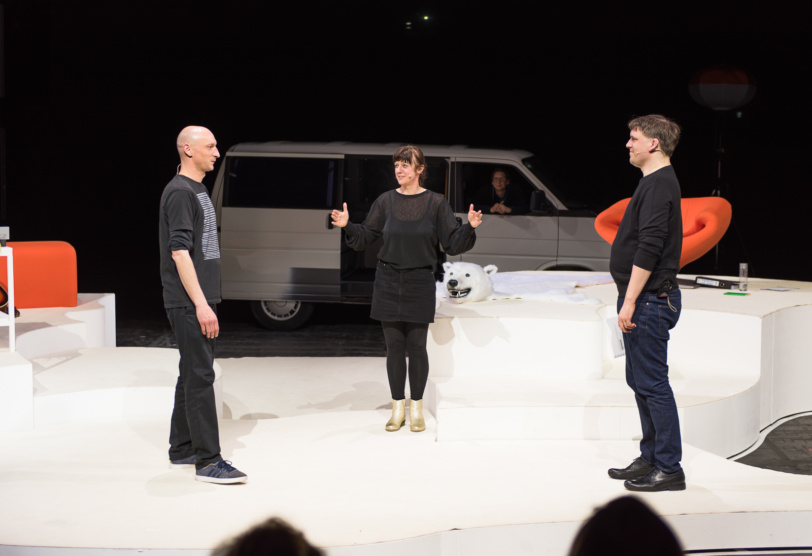
The final song without any “tic” felt like it had perfectly encapsulated all the beauty of theatre. Yet as soon as the music stopped, Hempel read a letter from his neighbor: “If you curse again in the yard, we will see you in court.” Before entering the theatre, we might have supported the neighbor’s stance, but two hours later, perhaps we all gained a little more understanding and tolerance for people with tic disorder. Isn’t this exactly the role of applied theatre?
Contents Index
0’55” Introduction to Rimini Protokoll
3’24” What exactly is applied theatre?
10’58” Appropriate scenarios for applied theatre
12’18” What is theatre?
15’21” Senior scholar’s favorite “prison theatre”
17’27” Why applied theatre is not very entertaining
20’08” What does applied theatre have to do with me?
21’26” PhD senior most wants to be a “domestic worker”
30’00” Where does Chinese theatre fall short compared to German theatre?