Tag: Susanne Kennedy

  • Year-end Summary 2020

    Year-End Summary 2020

    Ah, 2020 with no plays to watch…

    Originally, I expected to watch at least 50 plays in the first half of this year in Berlin, especially the FIND Theater Festival at the Schlosspark Theater in late March, plus the Berlin Theater Festival in May. Such a trip would have been the most enjoyable half year of my theater-watching career. Unfortunately…

    In summer, the pandemic improved somewhat, and I managed to catch Susanne Kennedy’s “Oracle” in Munich by seizing every opportunity. I also saw “Vacuum Cleaner,” selected for this year’s Berlin Theater Festival, and made three trips back to Berlin to watch two ballets and three plays. The ballets were special performances by the Berlin company prepared during the pandemic: “From Berlin with Love”. The three plays were the new work “Zdeněk Adamec” by Nobel laureate Peter Handke staged at the Deutsches Theater, plus two solo shows at Schlosspark Theater — Lars Edinger starring in “Peer Gynt” and Milo Rau’s “Everywoman.” Afterwards, I went to Switzerland, the toughest country in Europe regarding restrictions, to watch Rüping’s new work “Just at the End of the World.”

    Traveling around, almost every time I finished watching a show there was a lockdown. Two days after watching a show on March 9, Germany officially entered lockdown. After finishing shows in Berlin on October 28, the second lockdown began. The stubborn Zurich closed theaters three days after I returned…
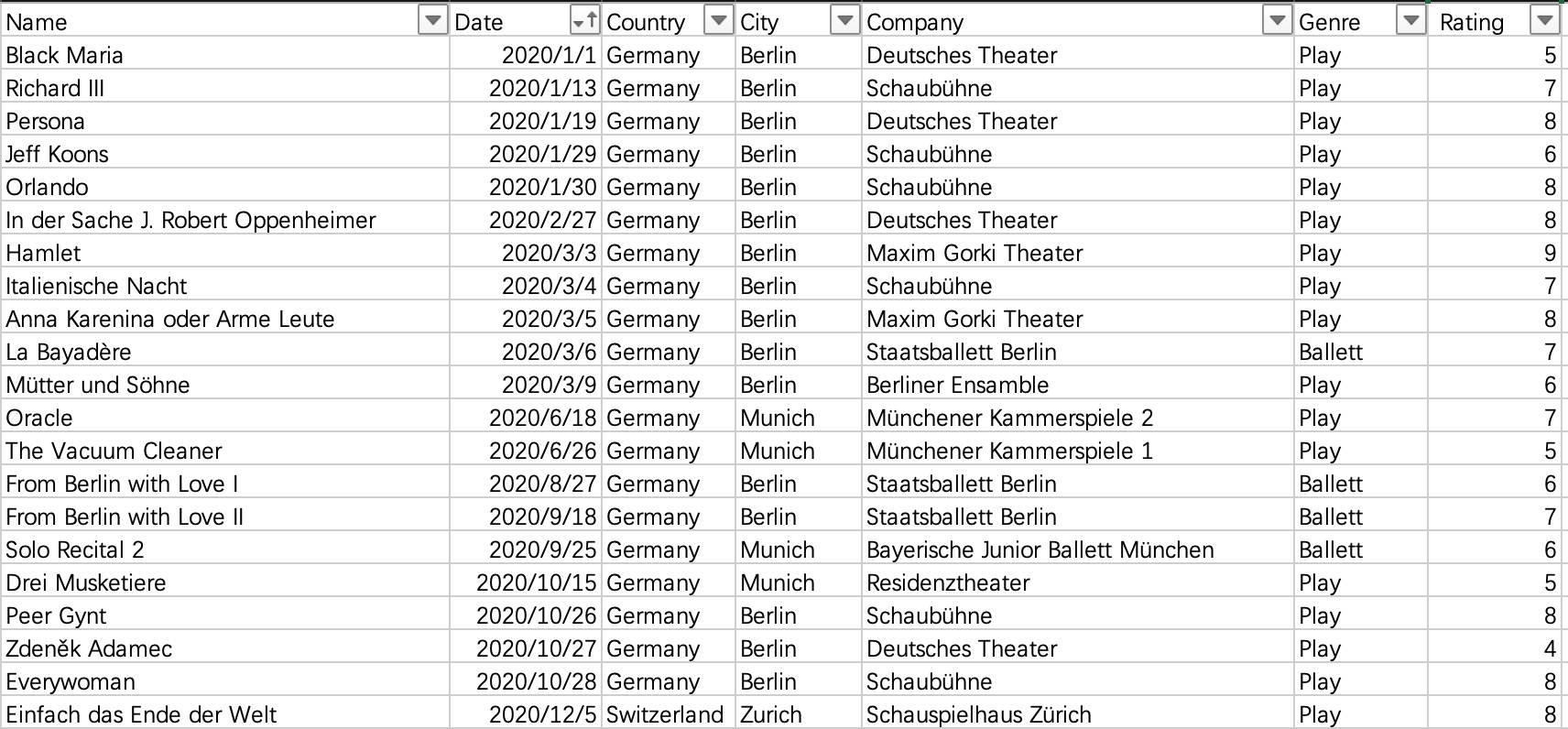
    I saw 21 performances throughout the year, and watched over a dozen plays sporadically online, but really couldn’t find much interest.
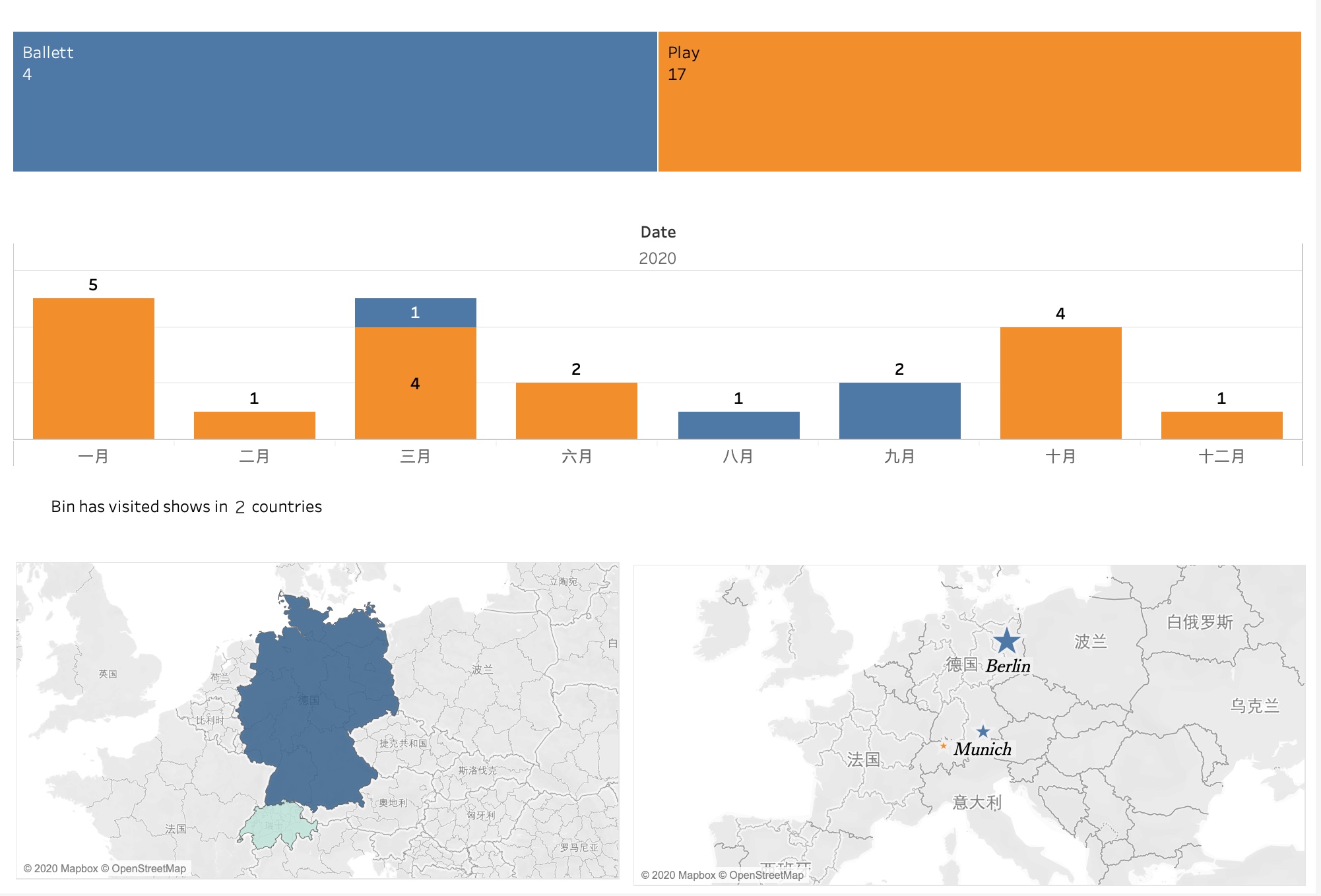

     

    The best of the year was admittedly a bit weak. Surprisingly, the highest score I found was the “Hamlet” (9 points) I watched at the Grips Theater in Berlin at the beginning of the year. The format was super innovative, and every detail opened my eyes. After the pandemic, they also released an online version. Comparing it to the many 10-point plays I watched last year is really…


    Since I couldn’t enter theaters, I had to stay home and read books. I read a Chinese script of “A Doll’s House” and a bunch of miscellaneous foreign books related to theater.

    “Ferryman” is a play I saw on Broadway in 2018, and it was also the Best Play at the Tony Awards that year. Revisiting the script, the plot still remains vivid in my mind.

    “Theatermusik” is a book by a professor at a neighboring school; a book review can be found here.

    “Razzle Dazzle” is written by Michael Riedel, a theater columnist for the New York Post, chronicling the rise and fall of Broadway from the 1960s to the early 21st century. It’s also a chronicle of the theater giant Shubert Organization (Why called a giant? See how many theaters they own in New York…)

    Well… outlook for next year: watch plays when there are plays, read books when there aren’t.
  • Theater Reopens, Munich Welcomes Its First Immersive Drama

    Theater Reopens, Munich Welcomes Its First Immersive Drama

    Theaters Reopen: Munich Welcomes Its First Immersive Theater Production

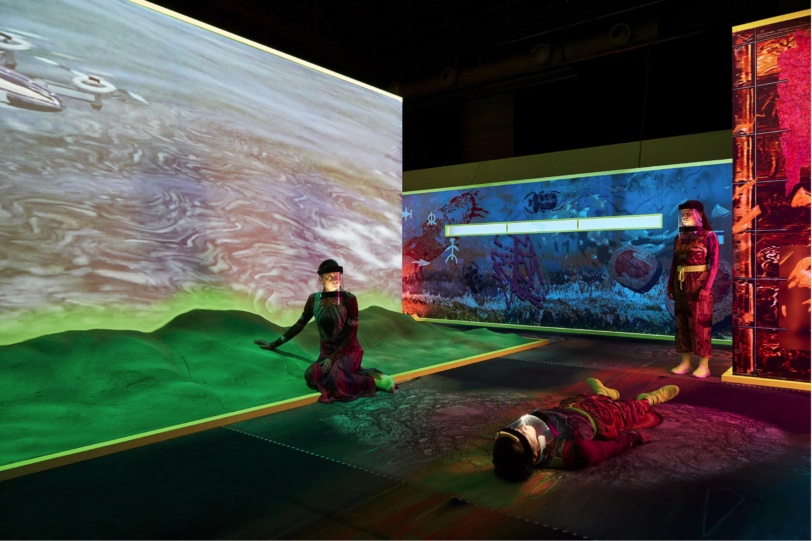
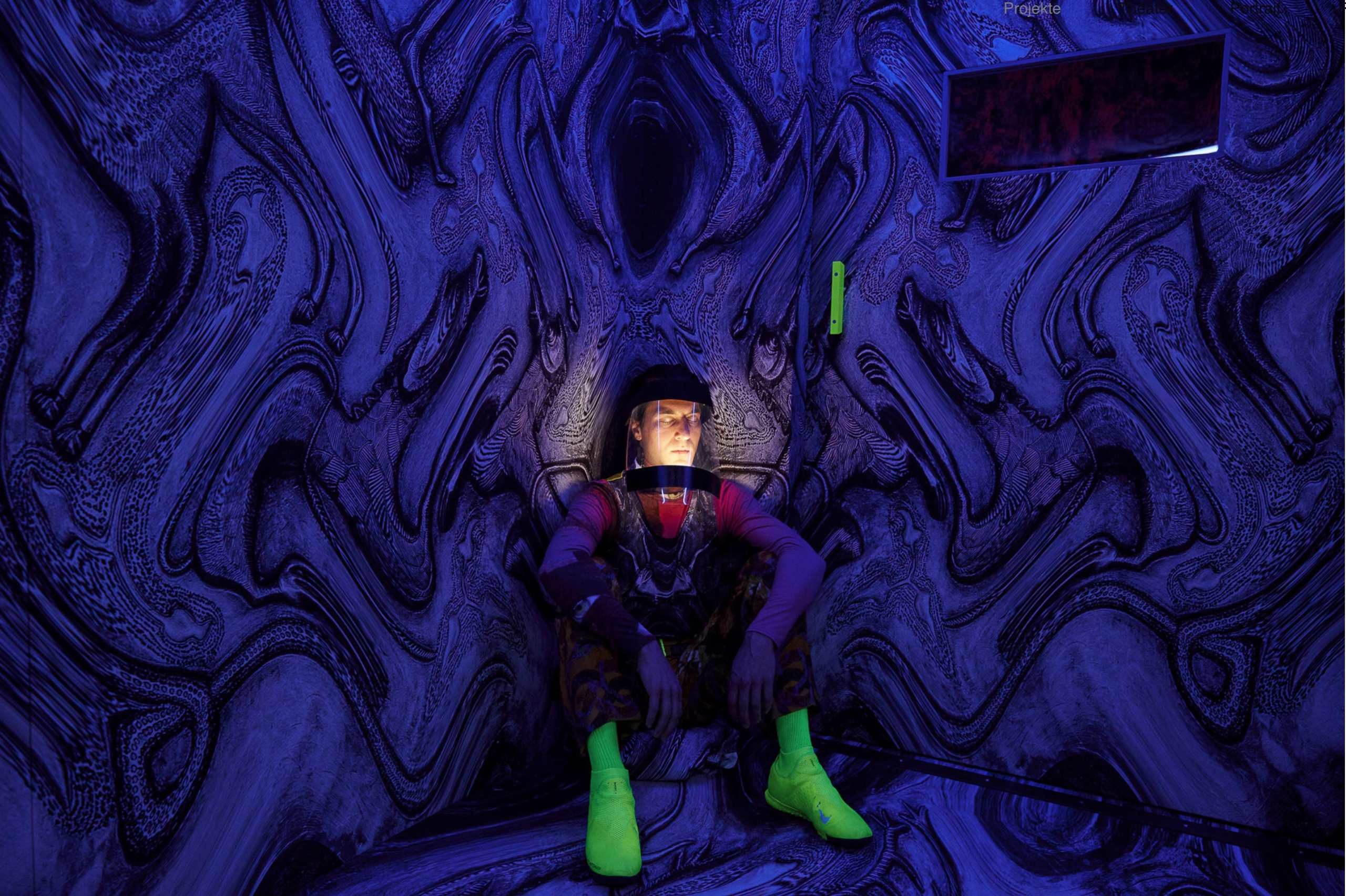
    “Know thyself” is the inscription on the threshold of the Oracle of Delphi[1] , and it may well be the most important maxim of the ancient world. The oracle’s guidance was often ambiguous and irrefutable. It posed paradoxes to those seeking advice, forcing them to think from another dimension. Created by Susanne Kennedy and Markus Selg, Oracle explores, in an immersive environment, the possibility of coexistence between humans and artificial intelligence. In this world, humanity ceases to be central to identity and instead becomes just one part of a symbiotic relationship with other creatures and intelligent machines.

    After falling in love with director Susanne Kennedy’s production of Three Sisters last year, I had been eagerly anticipating this new play. However, shortly after rehearsals began, the entire production was halted due to COVID-19. For several weeks, the director and actors continued rehearsing via Zoom, which made it possible for a trial version of this play to be presented in June, allowing theater-lovers to return to the stage.

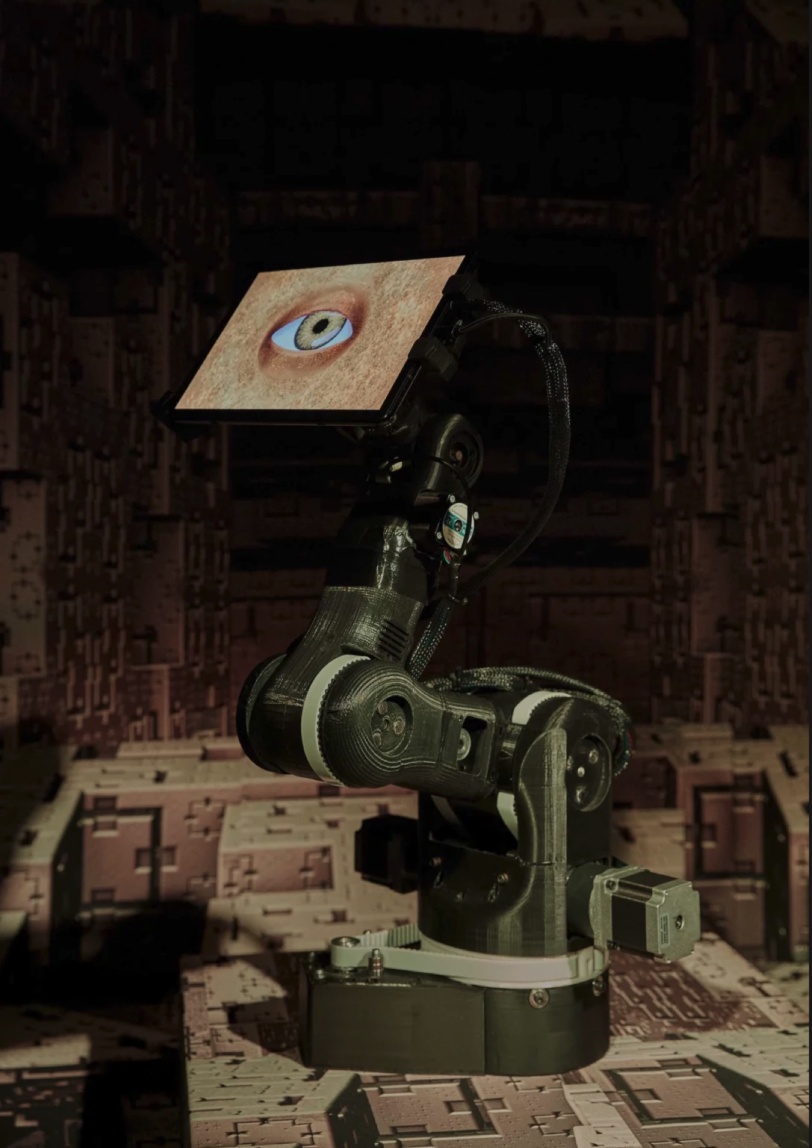
    Upon entering the main area, three actors wearing masks and voice modulators guide you to a stone pillar and introduce themselves as messengers of the gods. The intense gaze of the actors instills a strange fear. As they proceed, they silently slip behind you and whisper, their body language and words expressing curiosity about “you” as a human. This is, in my opinion, the best part of the entire play. The mix of excitement and fear quickly transforms the audience from mere observers into worshippers in a temple. When the actors’ voices are modulated to sound mechanical, audiences familiar with the director are instantly transported back to scenes from Three Sisters.

    © Judith Buss


    However, after the first segment, the following 30 minutes feel somewhat sloppy. Lying on blankets listening to recordings, entering a small dark room to watch strobe lights, or engaging in silent diagonal eye contact with actors in a room — although one can understand the director’s artistic intentions, the execution feels haphazardly assembled. The set relies heavily on curtains rather than solid architectural materials to evoke the feeling of a temple. As you move through the space, you gradually slip back from the immersive experience into the role of a spectator.

    At the center of the temple, there are three opportunities to ask the “god” a question. But whether due to a limited sample or something else, the “god” before me—especially as a materialist—felt like a “synthetic simpleton.” Walking out of the theater, the excitement from the first part lingers, but I did not feel as if I had undergone a spiritual journey.

    © Judith Buss


    This immersive theater piece is similar in form to others, but compared to Sleep No More, it lacks the freedom for the audience to explore independently, as actors guide you along a predetermined path. The performance admits one audience member every 6 minutes, taking about 36 minutes to complete one circuit. In a two-hour show, there may be only about 20 spectators in total. I wonder how such a format can be profitable.

    As Munich’s first (?) immersive theater production, it is still worth seeing. Hopefully, the final version will improve.

    7/10

    [1] The Delphic maxims are said to originate from the sacred sayings of the Oracle of Apollo in the Temple of Apollo at Delphi, dating back to the 6th century BCE. They served as a series of moral guidelines for the pre-Socratic Greek peoples, containing much ancient Greek wisdom and teachings on character. The most famous maxim, “Know thyself,” was inscribed above the door of Apollo’s temple. The Delphic maxims advise living a pious life and are teachings bestowed by Apollo upon humanity.