Category: 未分类

  • The Legacy

    The Legacy

    Das Vermächtnis

    A seven-hour theater marathon that keeps the audience inside the theater is not a medley of ancient Greek epics (“Dionysus Stadt”) nor a tome of Dostoevsky (“Anna Karenina oder Arme Leute”), but a story about the daily life of the gay community in New York.
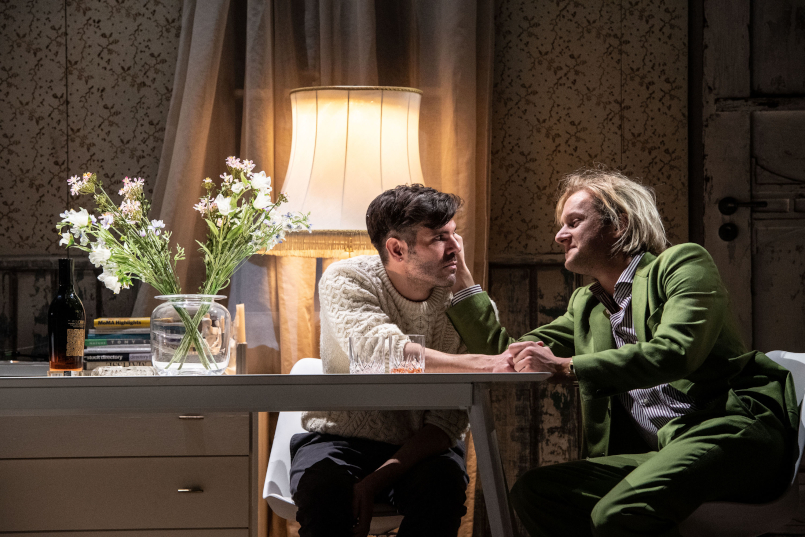
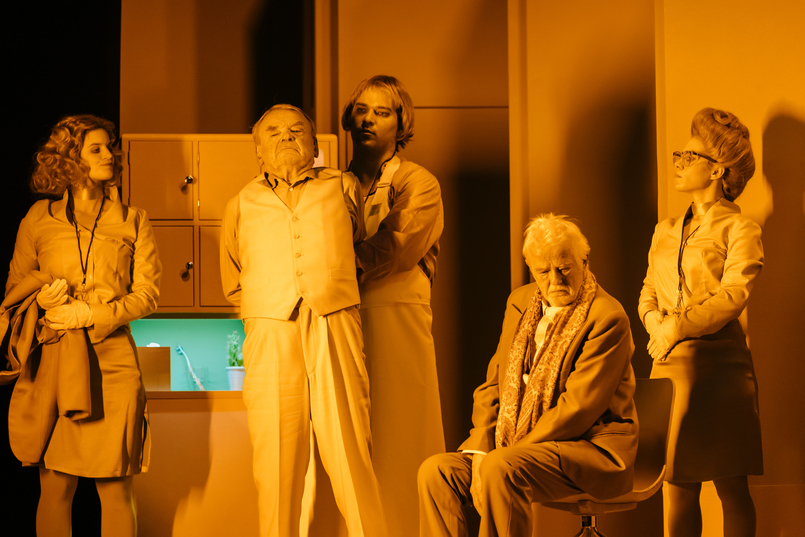
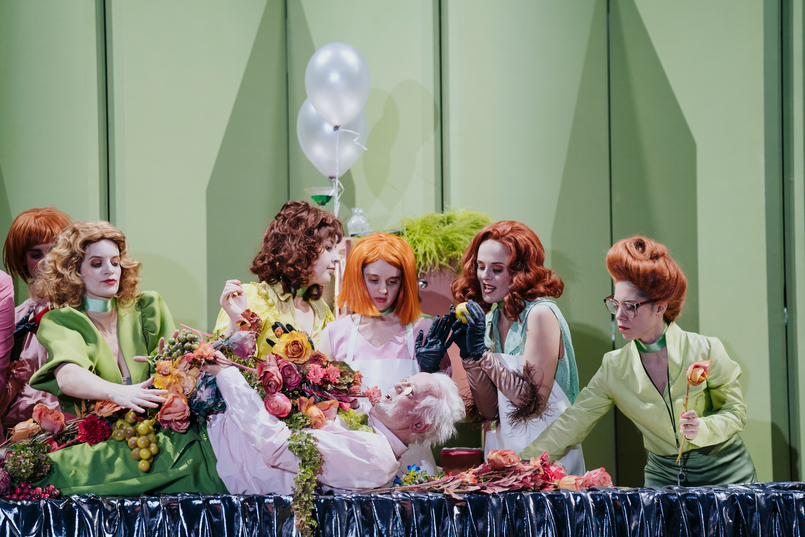
    In Matthew Lopez’s play “Das Vermächtnis” (“The Inheritance”), the protagonist Eric is a human rights lawyer living with his boyfriend Toby—a narcissistic writer—in a high-end apartment in the Upper West Side of New York. Their relationship undergoes dramatic changes after they encounter a man named Adam in a bookstore… Eric welcomes Adam into their circle, and as Adam stars as the male lead in Toby’s play and falls in love with Toby, other characters outside the trio begin to emerge on stage. Lopez has created more than a dozen characters in the script. While the relationship among the three moves forward, the stories of sex worker Leo, real estate magnate Henry, and the kindly Walter gradually unfold alongside the protagonists’ narratives.
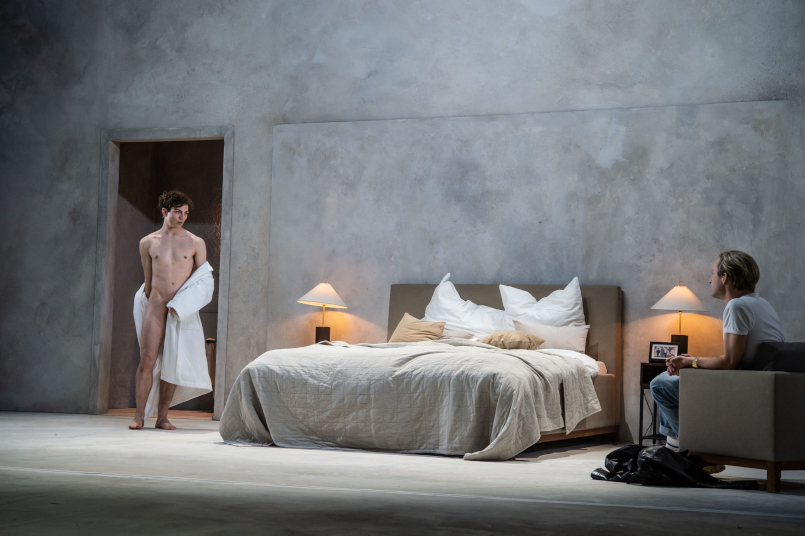
    “The Inheritance” refers both to the hundreds-of-years-old house in the story that specializes in sheltering terminally ill gay men, and also to the legacy left by three generations of the New York gay community—ranging from the Stonewall riots, to the devastation of HIV, to widespread acceptance of LGBT communities during the Obama era. When minority groups face the achievements of today, they should not forget the countless blood and tears left by previous generations. It’s difficult not to compare this play to “Angels in America”. Compared to that, this “Inheritance” replaces the individual with the development of a community to portray the dilemmas of an entire era. The storyline and characters in the play are simple and easy to understand but richer than “Angels in America”. The tangled romantic stories between the characters are merely love stories, not “gay love stories.”

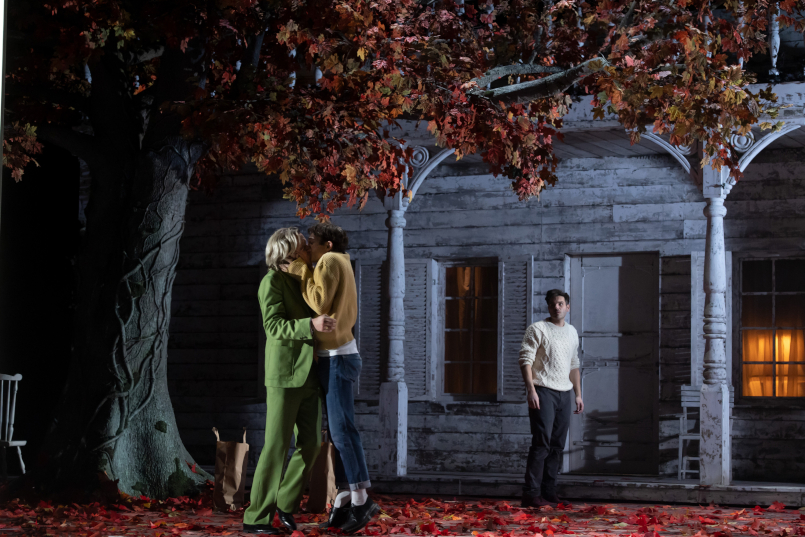
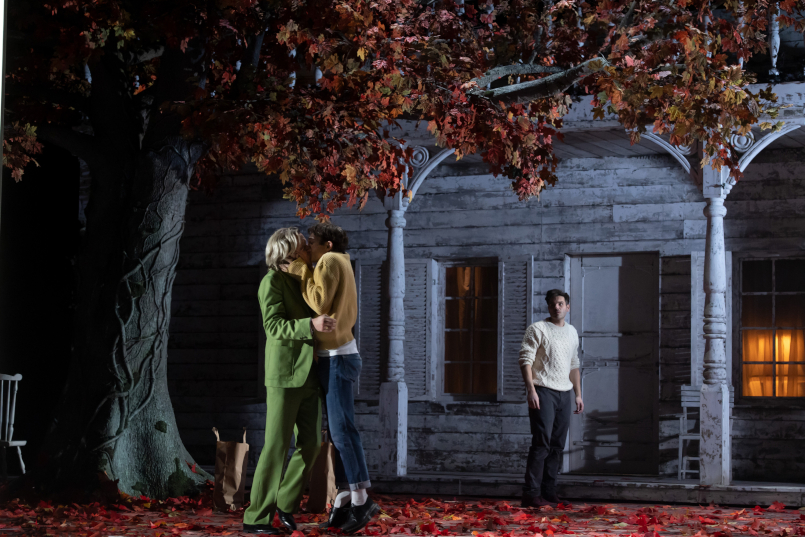
    “The Inheritance” premiered in London’s West End to great success, then moved to Broadway. The version now staged for the first time in Germany is directed by Philipp Stölzl, who, as a film director, brings a cinematic feel to the production. Scene transitions, rise and fall of curtains, and interplay of foreground and background all reveal a rigorous Hollywood industrial vibe. New York, as the story’s setting, is vividly brought to life by the director, from the opening black brick wall, Strand bookstore shopping bags, Peter Luger steaks, to even a trash can on stage that looks exactly like one on the streets of Manhattan. Each of these details transports the audience instantly through time and space into the noisy, hedonistic world of New York—perfectly capturing the essence of “Sex and the City.”

    Compared with other long plays lasting seven or eight hours, this part, aimed at bridging the two halves, feels more like a long TV series. After the first part unfolds all backgrounds and mysteries, the following story feels like a meaningless extension. Even though the quality of the work doesn’t decline, staying for the entire second part feels more like habit than expectation. What is most praised about this production is the acting. Familiar faces from the Residenztheater can easily create preconceived impressions for the audience, but the selfish arrogance and self-doubt of the cynical writer Toby (played by Moritz von Treuenfels) is portrayed in great detail. Vincent zur Linden’s first formal stage performance at the Residenztheater vividly brings to life the roles of Adam and Leo—from Adam’s initial timidity about New York to his later overconfidence after success; from a sex worker unable to lift his head to finding the meaning of life—he masterfully portrays the four characters’ very different personalities.
    In this German version, there is more a “creative translation” of the prior English version, much like some of Simon Stone’s plays previously staged at the Residenztheater, which don’t feel like traditional German theater at all. But what does traditional German theater really feel like? This question kept coming to mind during the seven-hour epic. The naturalistic theater of the West End and Broadway sharply contrasts with German avant-garde theater. From ancient Greek myths to Shakespeare, then to modern Ibsen and Albee, Germans have rarely staged these plays “seriously.” Yet when such a finely crafted piece appears in Germany—powered by delicate dialogue, nuanced acting, accessible humor, and stirring excellence—the German audience sees it as cheap and lacking depth, overlooking how naturalistic theater, with its unique charm and sense of immersion, breaks the fourth wall in a different way. This play’s inclusion in the Top 10 of the 2023 Berlin Theater Festival is a good sign, and one hopes more naturalistic, Anglo-American works will flourish in German-speaking areas, teaching German directors and actors—who often just play concepts and deliver grand lectures—about the upper limits of traditional performance.

    Rating: 9/10

    German Difficulty: 6/10

    Das Vermächtnis (The Inheritance)

    Part 1 and Part 2

    by Matthew Lopez

    Directed and Stage Design: Philipp Stölzl, Costumes: Kathi Maurer, Composition: Ingo Ludwig Frenzel, Lighting: Gerrit Jurda, Stage Assistance: Franziska Harm, Dramaturgy: Ewald Palmetshofer.

    Cast: Simon Zagermann, Nicola Mastroberadino, Thiemo Strutzenberger, Moritz von Treuenfels, Michael Goldberg, Oliver Stokowski, Vincent zur Linden, Florian Jahr, Vincent Glander, Noah Saavedra, Patrick Bimazubute, Nicole Heesters

    Premiere: January 30, 2022

    Duration: Part 1 approx. 3 hours, one intermission // Part 2 approx. 3 hours 30 minutes, one intermission

    www.residenztheater.de

  • Desire (Gier)

    Desire (Gier)


    Desire (Gier)

    Only love can save me, and love has destroyed me

    Only love can save me, and love has destroyed me

    Romance has become a luxury in our lives. While we scorn love with our words, deep inside we yearn to fall in love and embrace someone.

    British writer Sarah Kane described her work as a “depiction of hell.” Each of her five plays is filled with extreme scenes and lines. In this 1998 play Desire, actors Maja Beckmann, Benjamin Lillie, Sasha Melroch, and Steven Sowah speak fragmented short phrases offstage with four voices, overlapping and interweaving like Zaha Hadid’s postmodern architecture, filling the entire space.

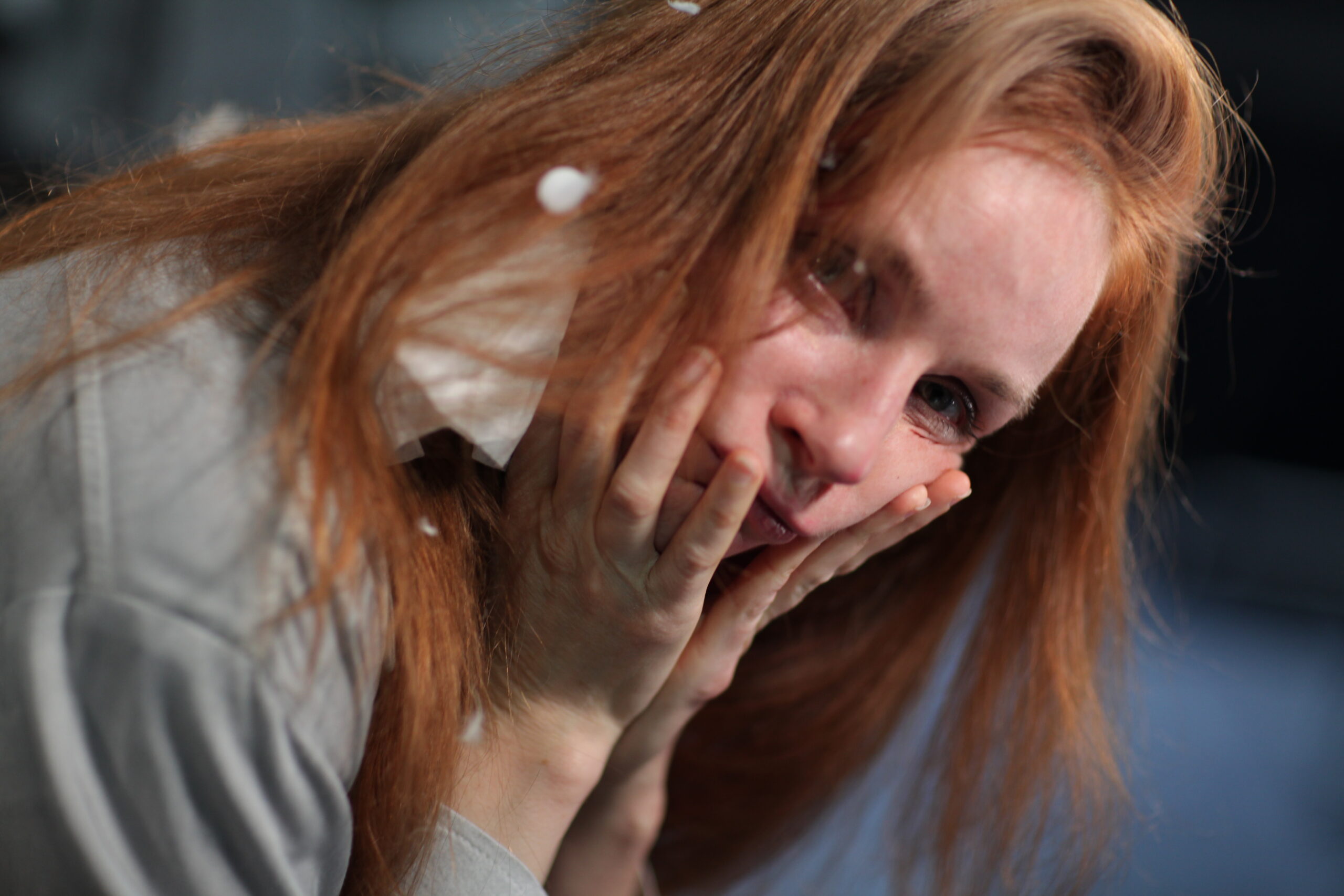
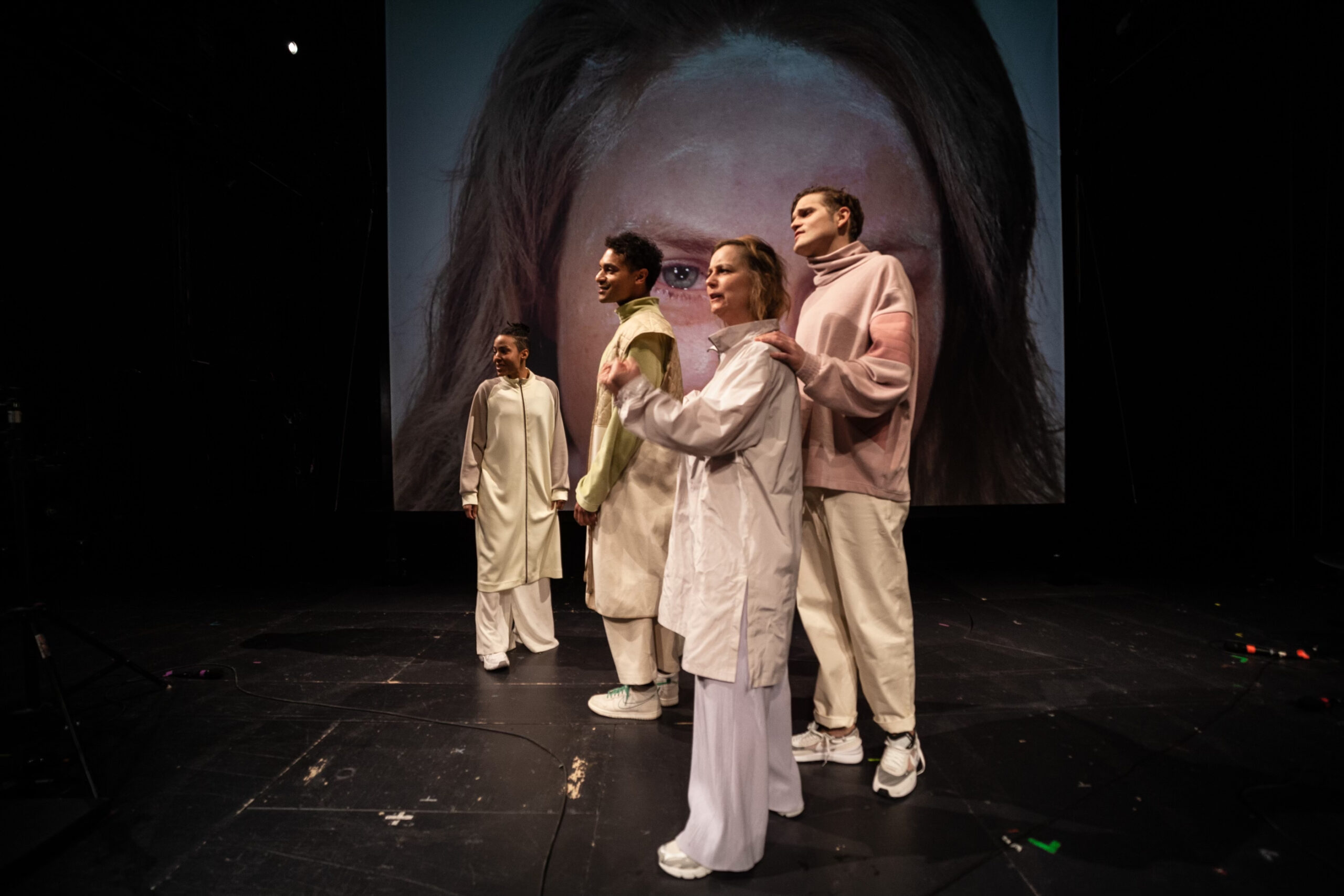
    Wiebke Mollenhauer sits on stage, her face projected hundreds of times larger at the center of the stage. At this moment, our focus is no longer on the characters’ backgrounds or the motives of each line, but on how the words affect our inner feelings when we hear them. What comes to mind when we think of the word “love”? Most likely, it is a person’s face—perhaps our current lover or someone from a “past” in our lives. Facial expressions are the window through which we unconsciously interact with others. In this play, Wiebke’s magnified expressions, paired with the lines, evoke the waves stirred in our hearts by the protagonist’s story.

    In Sarah Kane’s poetic text, fragments of conversation repeatedly appear, interspersed with commentary and associations related to the dialogue. These words are both harsh and tender. Childhood sexual trauma, the longing to be loved, relationships with parents, fantasies about intimacy, and fear of death. None of the lines spoken by the four voices is complete, but much like our memories, these flashing fragments gradually construct our recollections of the past. It is these memories that reveal the deepest imprint the traumas have left on us—a longing for security. But when the security we seek finally arrives, can we truly place all our hopes upon it? One heartbreak after another has gradually taught us that relying only on ourselves is the most reliable strategy. Yet, in the stillness of night, we still yearn for a love to which we can wholly surrender ourselves.

    In the performance, the story unfolds from childhood physical abuse, through the confusion of adolescence, to eventual self-realization. Without uttering a single line, Wiebke uses only her expressions to masterfully toy with the emotions of the entire audience. What expression do you have when your grandfather, sitting next to you, exposes himself and the still-child you respond? What expression when, as a teenager, a stranger forces you to straddle him? What expression when you decide to completely abandon yourself, seducing every man who meets your gaze in a bar? Numbness? Crying? Or laughing out loud? Usually somewhat wooden on stage, Wiebke’s mesmerizing control of her facial expressions demonstrates acting at its peak. Compared with her, the usual leads Maja and Benjamin are completely overshadowed. She doesn’t say a word the entire evening, yet with her face and the text flowing alongside, she conveys surprise, sadness, anger, annoyance, excitement, pain, and fear. No one dares to look away from this brilliant acting at any moment. As the performance gradually draws to a quiet close, Wiebke, also the author Kane, and every one of us sitting in the audience, burst out of the theater, breaking free from the shackles that bind us and finally rush toward freedom and liberation. When the audience sees our souls finally find freedom, many are moved to tears; yet the author who depicted this freedom ended her own life a year after completing this work, escaping from the hell she described.

    Kane’s text is complex, like a difficult long poem, but Rüping always manages to simplify the incomprehensible. In this play, the only thing the audience truly needs to “read” is Wiebke’s expression; the lines serve merely as reading aids. The stage design recalls Rimini Protokoll’s All Right, Good Night, also featuring a large screen in the center with thousands of lines continuously scrolling, contrasted with the actor’s complex facial expressions. Naturally, it is easier for the audience to “read” the latter. As the audience’s eyes remain fixed on the twenty-square-meter giant screen on stage, the brilliant director Rüping also selects a quartet, electronic music, pop songs, and various styles for the music, constantly switching styles within a segment of lines. The seemingly mismatched music strangely always manages to elevate the emotions to a peak. Accompanied by the music’s final movement, the scene is second only to the director’s earlier work Dionysus City’s final rising sun in terms of unforgettable impact.

    Photo: ©Orpheas Emirzas

    10/10 (Predicted Best of the Year)

    German Difficulty: 2/5 (English subtitles)

    Desire

    by Sarah Kane

    German translation by Marius von Mayenburg

    Directed by: Christopher Rüping, Set Design: Jonathan Mertz, Costume Design: Lene Schwind, Music: Christoph Hart, String Trio: Jonathan Heck, Coen Strouken, Polina Niederhauser, Video: Emma Lou Herrmann, Live Video: Wilf Speller, Lighting: Gerhard Patzelt, Dramaturgy: Moritz Frischkorn.

    Cast: Benjamin Lillie, Maja Beckmann, Sasha Melroch, Wiebke Mollenhauer, Steven Sowah.

    Premiere on March 4, 2023

    Duration: 1 hour 50 minutes, no intermission

    www.schauspielhaus.ch


  • Die Eingeborenen von Maria Blut

    Die Eingeborenen von Maria Blut

    1932-1934年的奥地利小村庄,居住在这里的原住民都对村中工厂的关闭感到恐慌。突然好消息从天而降,一个名叫Shellbach的企业家准备接受工厂生产“Raumkraft”,可这究竟是个什么并没有任何人知道。。。。

    Maria Lazar是在一战前生活在奥地利的犹太人,因为纳粹的迫害被迫出走,而这部作品也是在她流亡期间完成,《玛丽亚之血的原住民》揭示了1934年前奥地利在总理Dollfuß领导下的社会状态,让人们更加具象的理解了法西斯主义在德奥盛行的深层原因。作为当时“德国的附属”,多数人都觉得奥地利随同希特勒变为纳粹是在强权之下不得已而为之,而这部作品正是说明了法西斯主义不光是外部传来的,同样也是从奥地利内部自下而上产生的,贫困和对衰退的恐惧促进了反犹太主义倾向和对救赎的幻想,这种幻想是是eingeboren(原生的),这种对于其他种族的恐惧与压迫是人性使然。

    在小说中近乎三分之二的内容都以对话方式呈现,像是同样进了十佳名单的《Zwiegespäch》一样,又是一部以细腻又有力量的文字为重点的剧本。但小说中的人物要远远多于这部戏,戏里的情节也只用了小说中很少的一部分,这样导致的结果就是让戏剧中整体的剧情过于松散。导演采用了舞台全黑的大停电效果实现不同剧情蒙太奇之间的切换,这也使得故事的结构显得并不完整。

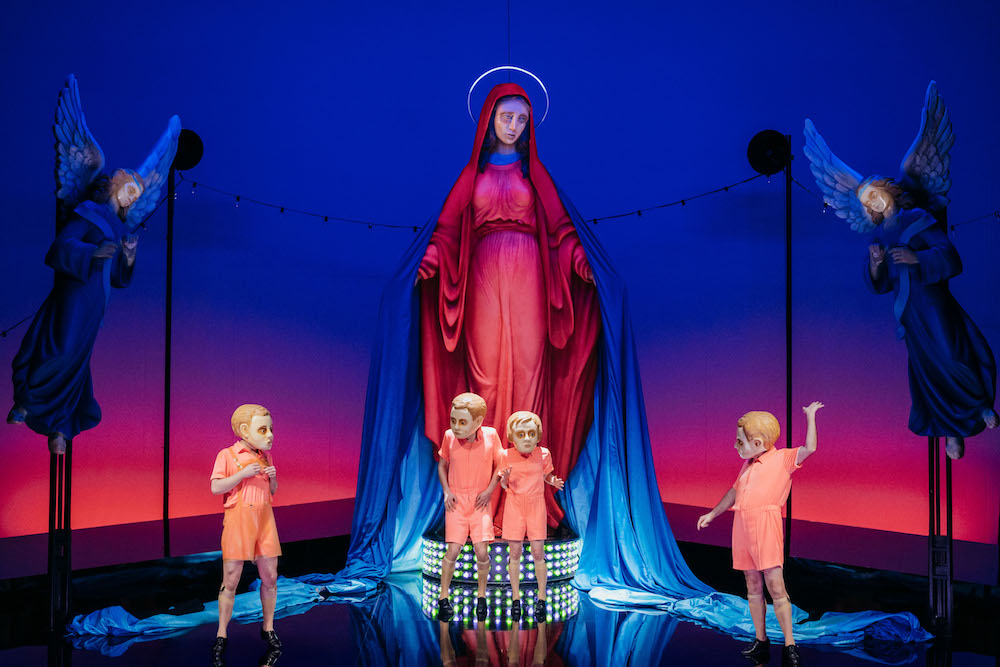
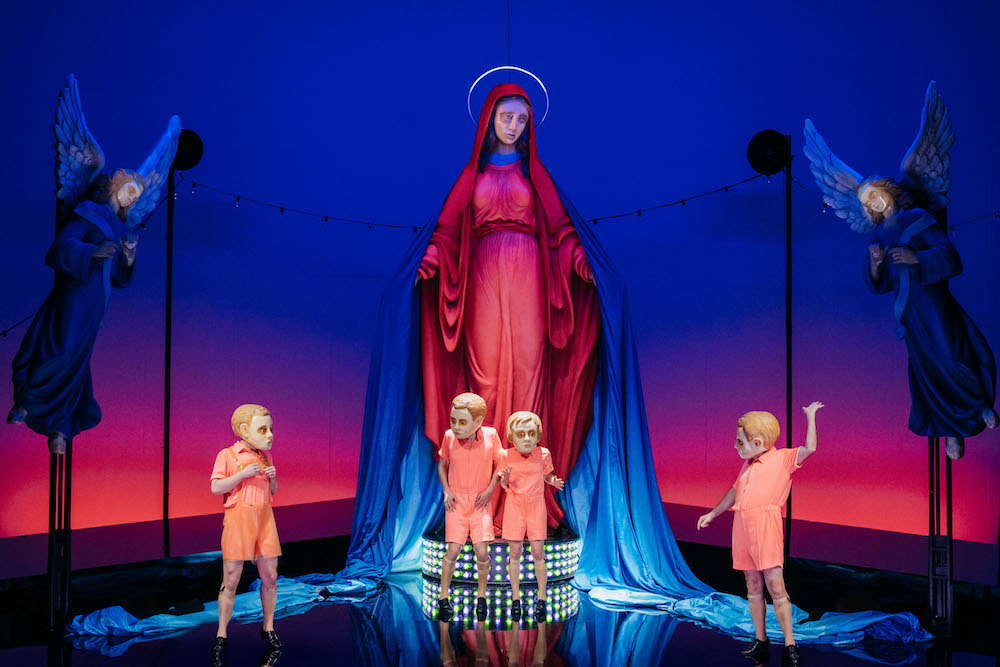
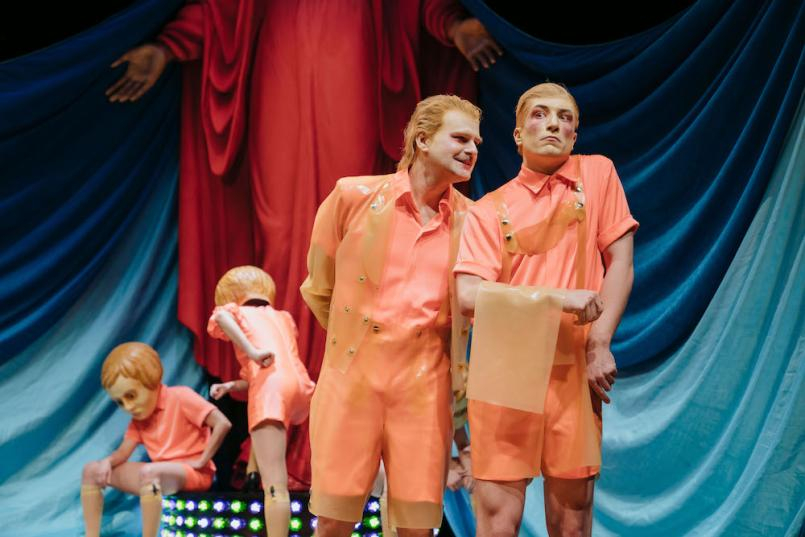
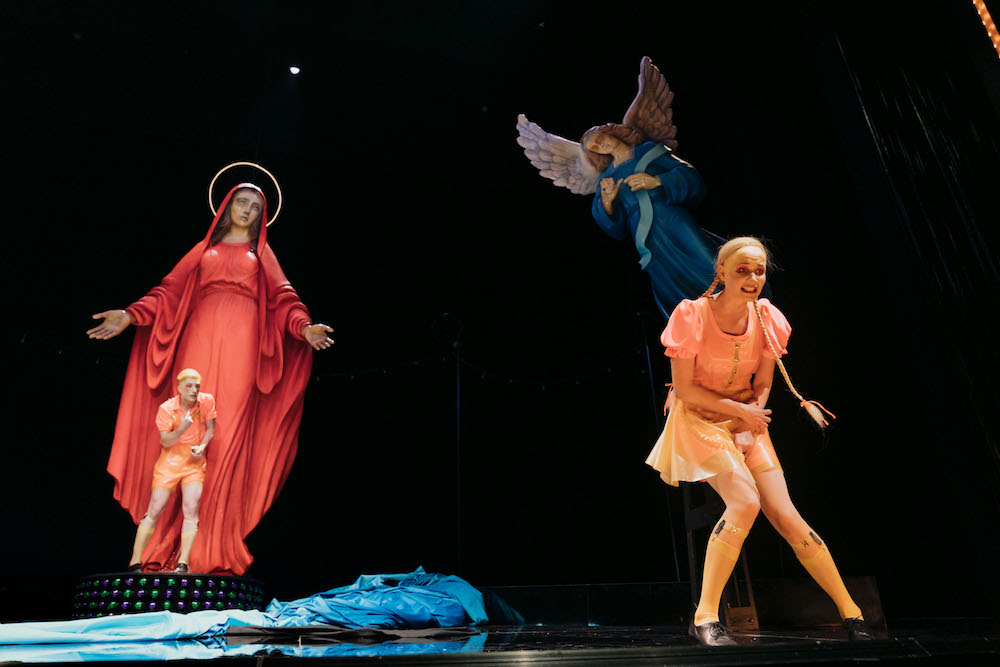
    戏中的主要角色每个人偶都搭配了巨大的人偶头盔,和他们细小的四肢形成了强烈的对比, 在舞台的两侧有专门的人读台词,而肢体动作而是由戴头盔的演员完成,几乎所有的对话都采用了这种双黄的模式,演员们行动和台词也有轻微的,刻意的错位,带来了一种奇妙的违和感。

    还有一个是外国观众可能基本不会注意到的是,剧中的犹太人角色Reindl女士的口音十分像犹太的依地语,为了练这个口音,演员还特地联系了犹太人博物馆的学者,使得这个已经消亡的语言在舞台上又一次被呈现。

    在演出的终场中,灯光下被推倒的巨大的圣母像让整个舞台有了些电影般的年代感,收音机里传来的厂房将重新开工的消息,民众又燃起了虚假的希望,历史的车轮转呀转,什么都不会改变。。

    这部作品虽然以一个小村庄里发生的故事解释了时代的大背景,但因为情节删减过多,导演对于细微之处的的把握不足,并没有让观众产生对大时代下个体的渺小与无能为力产生感慨。但原著小说以及作者Maria Lazar,都是不知为何被尘封了几十年,直到最近才被人重新发现的宝藏,对于追溯当时的历史有着非常重要的意义。

    6/10

    德语难度 5/5

    Die Eingeborenen von Maria Blut

    von Maria Lazar

    Bühnenfassung von Lucia Bihler und Alexander Kerlin

    Regie: Lucia Bihler, Bühne: Jessica Rockstroh, Kostüme: Victoria Behr, Musik und Sounddesign: Jacob Suske, Licht: Norbert Piller, Dramaturgie: Alexander Kerlin, Choreographie und Maskenarbeit: Mats Süthoff.

    Mit: Stefanie Dvorak, Philipp Hauß, Jonas Hackmann, Robert Reinagl, Dorothee Hartinger, Lili Winderlich.

    Premiere am 20. Januar 2023

    Dauer: 1 Stunde 50 Minuten, keine Pause

    www.burgtheater.at

  • Zwiegespräch (Dialogue)

    Zwiegespräch (Dialogue)

    Zwiegespräch (Dialogue)

    With half the seats in the audience empty, ridiculously small legroom, coming to see a play in Austria for the first time clearly felt a different atmosphere compared to Germany. Peter Handke’s new book Dialogue was also brought to the stage of Vienna’s Burgtheater by a new-generation director Rieke Süßkow just two days after Handke celebrated his 80th birthday.

    Without fixed roles or instructions for the actors, Handke’s new book is less of a script and more like a dramatically charged prose poem. What moves readers is not the content of the text, but the atmosphere and sadness hidden between the lines. In Handke’s previous work Zdeněk Adamec, the protagonist is a young person disillusioned with the world who chooses to self-immolate in a square in Prague at the point of utter despair. This section of Dialogue tells of the opposite extreme: an elderly person facing the end of life, full of reluctance and helplessness about the imminent end of the journey.

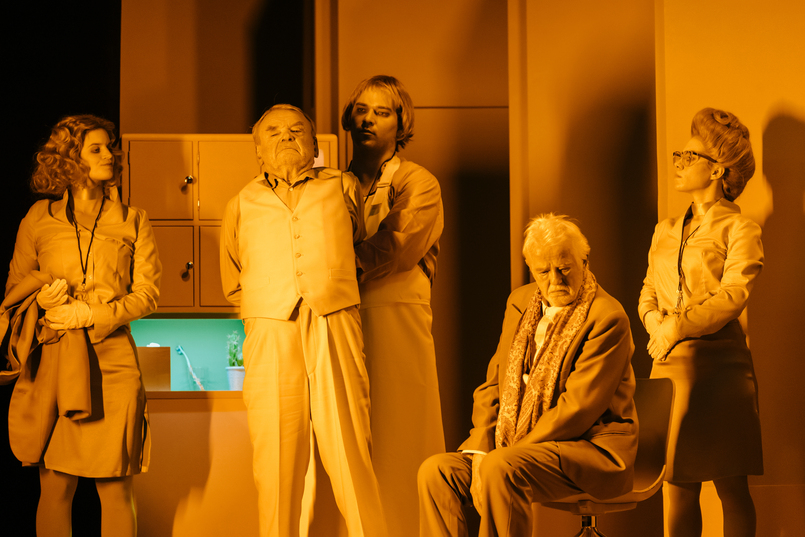
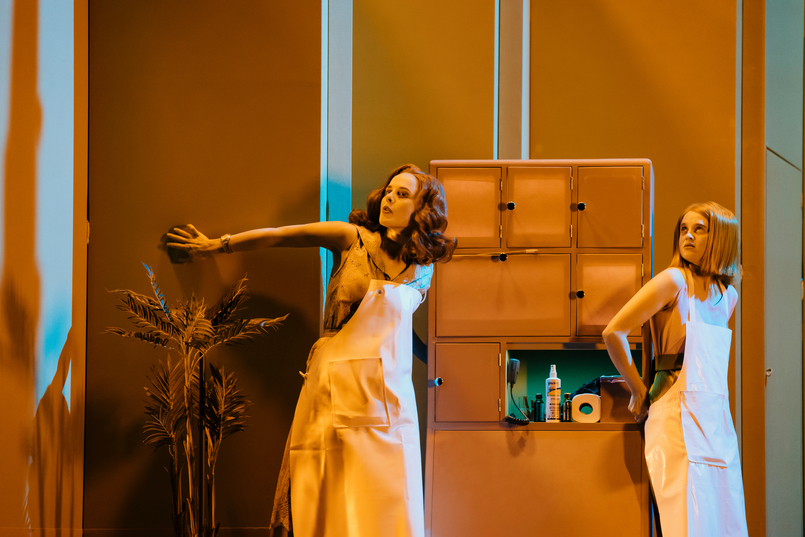
    In Süßkow’s version, the stage is split in two. On one side, an elderly person in a nursing home recounts their youth; on the other, young nurses perform casual care for the elderly. Whenever the nurses sing “La Paloma,” the elderly play a game of musical chairs, and the loser must hand over all personal belongings and is forced off the stage. Staging such a scene on this stage inevitably recalls the “nurse murders” incident that happened in Vienna in the 1980s—bizarre music, twisted body movements, and suddenly halted rhythms completely replicate the style of season two of American Horror Story.

    When facing Handke’s type of text—where “mood outweighs content”—it is crucial for the dramaturge to thoroughly digest and break down the text, then recreate it with their own unique poetry and flair. But every dramaturge approaches Handke’s works with a measure of reverence and cautiousness. This play is no different; the director has done their best to separate the original text and their own unique stage presentation, also weaving in their new-generation understanding of death. However, much of Handke’s powerful text remains preserved, leaving the audience with a discomforting sense of division, as if watching two completely different shows on two TVs simultaneously.

    If we separate the two incompatible parts, firstly the text: Handke’s prose poem-like language, though barely conveyable through the excellent performances of the actors, remains too difficult for foreign audiences. Even the three experienced actors were repeatedly prompted on their lines on stage. One can imagine that even translating this text into English would be a heavy burden for non-native speakers. On the other hand, the director’s command of the stage elements is refreshingly impressive. Even if it seems she doesn’t fully grasp Handke’s work, her interpretation of “transmitting German drama” is skillful to the point of ease. The highly saturated contrasting stage lighting, the sudden start of techno music, the actors collectively going mad—all show that the director has given her utmost effort. As a multiple award-winning company in Austria’s top tier Burgtheater, the actors’ skills are equally astonishing. Whether it’s the seasoned xxx or the young actors around thirty, their acting could serve as headliners in theaters I often visit. For readers in Germany who don’t mind the trip to Vienna, this theater likely holds many surprises.

    Selected among the top ten at the 2023 Berlin Theater Festival, it perhaps didn’t reach the top 10 level across the German-speaking region for me, but for audiences going to Berlin in May, especially those who rarely encounter German theater, I still highly recommend experiencing this play to feel what the author loves about the “indispensable elements of German theater” lol.

    7/10

    German difficulty: 5

    Zwiegespräch

    by Peter Handke

    Directed by: Rieke Süßkow, Stage Design: Mirjam Stängl, Costumes: Marlen Duken, Music: Max Windisch-Spoerk, Lighting: Marcus Loran, Choreography: Daniela Mühlbauer, Dramaturgy: Sandra Küpper.

    Cast: Hans Dieter Knebel, Elisa Plüss, Maresi Riegner, Branko Samarovski, Martin Schwab. Also Sara Abci, Nikolas Altmann, Katharina Franzel, Kolja Gerstmann, Hannah Lou Harrison, Katharina Hochreiter, Karla Howorka, Marko Jovanovic, Willfried Kovárnik, Edmund Lobinger, Hannah Pichler, Maximilian Schwertführer, Sara Siedlecka, Felix Von Gässler, Julia Carina Wachsmann, Brigitte Weinberger and Adam Hadj Mabrouk, Thomas Kern, Levi Powell.

    World premiere on December 8, 2022

    Duration: 1 hour 50 minutes, no intermission

    www.burgtheater.at

  • Das Vermächtnis

    Das Vermächtnis

    七个小时的剧场马拉松,把观众留在剧场内的故事并不是古希腊史诗的串烧(“Dionysus Stadt”)亦或是陀思妥耶夫斯基的大部头(“Anna Karenina oder Arme Leute”),而是一部在纽约同性恋群体的日常生活。

    在剧作Matthew Lopez的这部“遗产(Das Vermächtnis)”中,故事主角Eric与是人权律师,与其男友Toby-自恋的作家共同住在纽约上西区的一间高档公寓中,两个人的关系因为他们在书店偶遇的男子Adam二开始产生了翻天覆地的变化。。。Eric将Adam接纳到他们的群体中,随着Adam参演Toby戏剧男主角而与Toby相恋,三人关系外的角色也都逐一浮现在舞台上。Lopez在剧本中设置了十数个角色,在上述三人的关系随着剧情推进的同时,性工作者Leo,地产大亨Henry,老好人Walter也与主角们的故事也都慢慢展开。

    “遗产”-说的既是剧中几百年历史专门收留临终同性恋的房子,也是在纽约三代同行群体奋斗留下的痕迹,从石墙事件,到HIV的肆虐,在到奥巴马时期LGBT群体被广泛的接受。行少数群体面对现在取得的成果时,也不应忘了前面几代人留下的无数血与泪。这样的一部戏很难让人不去拿“天使在美国”来比较,与之相比,这部“遗产”用一个同行社群的发展代替了个人,来展现整个时代的困境,剧中故事与人物性格在简单易懂的同时也比“天使在美国” 更加丰满,任务之间错综复杂的爱情故事只是爱情故事,而不是“同性的爱情故事”。

    “遗产”在伦敦西区首演,大获成功后被搬到了百老汇,现在第一次被搬上德国舞台的版本是由Philipp Stölzl执导,Stölzl作为电影导演,在对这部戏的把控上也充满了电影感,场景的切换,幕布的起落,前景后景的穿插都透露着一股好莱坞工业的严谨劲儿。纽约作为故事发生的背景,其中的元素被导演表现得淋漓尽致,从开场的黑色砖墙,书店Strand的购物袋,Peter Luger的牛排,甚至台上出现的垃圾桶也与曼哈顿街头上的一模一样。每次这些细节的出现,都能让台下的观众一瞬间转换时空,将自己置身于纽约喧嚣与纸醉金迷中,将 Sex and the City 描绘的淋漓尽致

    与其他七八个小时的长篇作品相比较,这部分为了上下两部分的戏其实更像是一部长长的美剧,在第一部分将所有的背景与悬念都展开后,后面的剧情更像是一种无意义的拉伸,即便作品的质量并未下降,但能坚持看完第二部分更像是因为习惯,而不是期待。这肠炎初中最为令人称道的就是演员的表演,皇宫剧院这些熟面孔的出现很容易让人们对演员产生既有印象,但是玩世不恭的作家Toby(Moritz von Treuenfels饰)的自私自大和对自己价值的怀疑被表现得细致入微,Vincent zur Linden 在皇宫剧院的舞台上的第一次正式演出就将Adam和Leo这两个角色都刻画地活灵活现,对纽约从开始的怯懦感到成功后的不可一世;从一个抬不起头的性工作者到最后找到了人生价意义,截然不同的四个人物性格都在他的表演下惟妙惟肖

    在这部德语版本中,其实更多是对之前英文版的“创造性翻译”,就像之前同样在皇宫剧院上演的Simon Stone的一些作品一样,完全没有看德国戏的感觉。可是怎样的感觉才算德国戏剧?在这七个小时的长篇巨制中这也是一个不断映入脑中的问题。西区与百老汇的自然剧场(naturalistisches Theater) 与德国的先锋剧向来是泾渭分明,从古希腊神话到莎士比亚再到近代的易卜生、阿尔比,德国人从来没有“正经”排过几部戏。而像这样一部精细打磨过的作品,凭借着细腻的台词、演员细致入微的表演、通篇容易理解的笑料与煽情的卓越作品出现在德国人面前时,德国观众看到的却是廉价与没有深度,却忽视了自然剧场以它独特的魅力与代入感,用另一种方式打破了第四面墙。这部作品入选2023的柏林戏剧节十佳也是一个好的信号,希望将来能有更多自然剧场、英美作品能在德语区绽放异彩,让在德国只会玩概念和给观众上大课的导演和演员学习一下传统表演的上限在哪里。

    评分 9/10

    德语难度 6/10

    Das Vermächtnis (The Inheritance)

    Teil 1 und Teil 2

    von Matthew Lopez

    Inszenierung und Bühne: Philipp Stölzl, Kostüme: Kathi Maurer, Komposition: Ingo Ludwig Frenzel, Licht: Gerrit Jurda, Mitarbeit Bühne: Franziska Harm, Dramaturgie: Ewald Palmetshofer.

    Mit: Simon Zagermann, Nicola Mastroberadino, Thiemo Strutzenberger, Moritz von Treuenfels, Michael Goldberg, Oliver Stokowski, Vincent zur Linden, Florian Jahr, Vincent Glander, Noah Saavedra, Patrick Bimazubute, Nicole Heesters

    Premiere am 30. Januar 2022

    Dauer: Teil 1 ca. 3 Stunden, eine Pause // Teil 2 ca. 3 Stunden 30 Minuten, eine Pause

    www.residenztheater.de
  • Count Audland

    Count Öderland

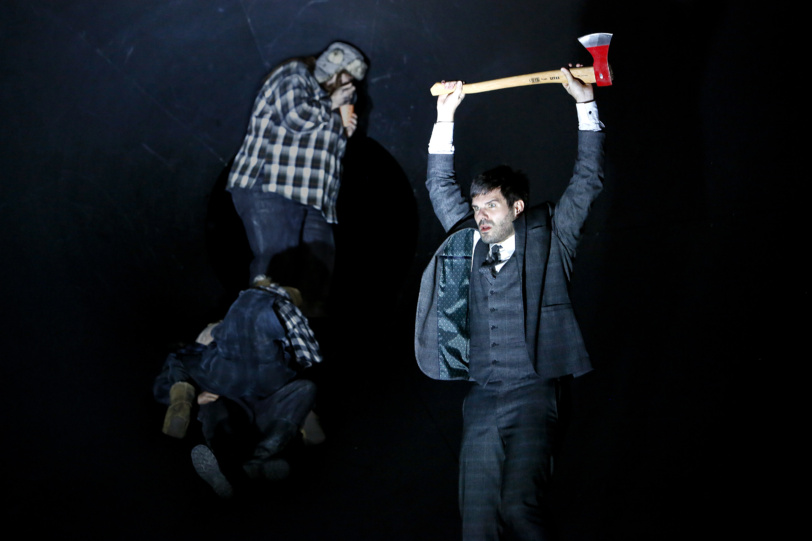
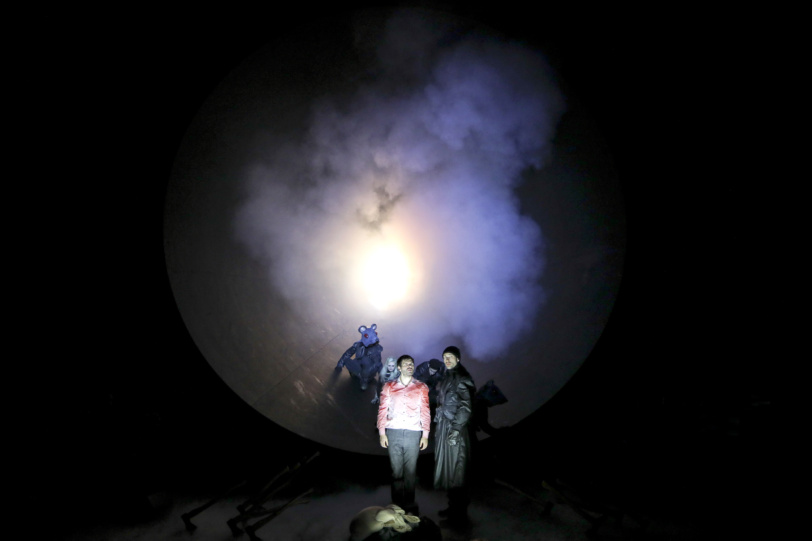
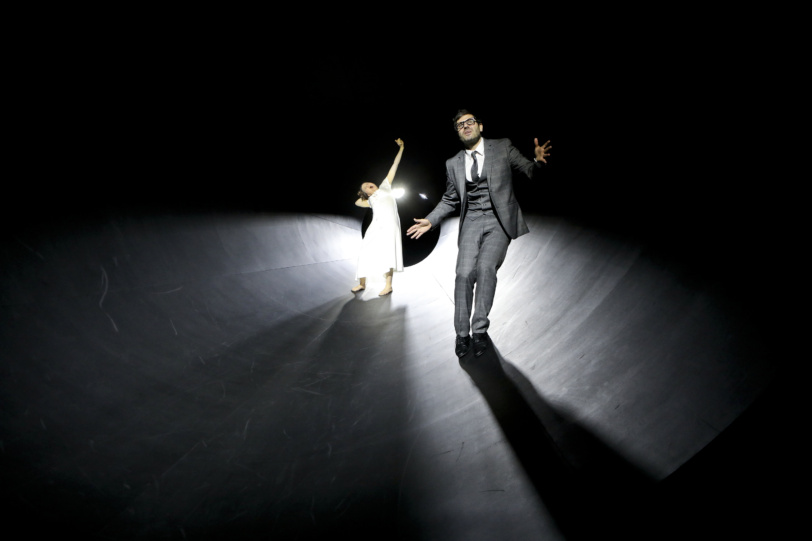
    A huge trumpet-shaped stage faces the audience, where on a gigantic slope people confuse dreams with reality, disrupting the continuous flow of time and reflecting on class contradictions.

    Count Öderland (Graf Öderland) tells the story of a bank clerk who kills a guard with an axe, which seems to be a senseless murder. Only the prosecutor shows sympathy for the crime and is inspired by it to break through conventional life. From then on, he follows the legend of Count Öderland, wandering the countryside with an axe, killing all those who oppose his claims of freedom. Under Count Öderland’s leadership, followers unite, and the prosecutor’s personal actions develop into a widespread uprising. In the end, the rebellion causes political turmoil, but the freedom the prosecutor desires is never realized.

    v.l. Mario Fuchs, Linda Blümchen, Julius Schröder, Thiemo Strutzenberger © Birgit Hupfeld


    The original work consists of 12 chapters. Each chapter moves forward on the timeline, but they are not entirely coherent, using a montage-style transition. In Bachmann’s stage adaptation, the montage is preserved, but the chronological order is adjusted. Without affecting the narrative, flashbacks are interspersed from time to time. The entire 12-chapter structure is like twelve fingers intertwined, blending very well.

    One of the most important themes of this play is dreams and reality. The prosecutor enters a dream state from the moment he kills the first person in the forest cabin, but upon waking at the end, he finds everything that happened in the dream was actually real. Whether as a reader or audience member, encountering this interplay between dreams and reality induces the same confusion as the protagonist. The most brilliant part of the entire play is that it does not treat dreams and reality as opposites, but rather lets fantasy become reality and reality remain fantasy. This, in fact, is the essence of drama. Watching normally, one feels the director perfectly fulfills the original author Max Frisch’s description of the stage: “Terrifying, but unreal.”

    v.l. Barbara Horvath, Linda Blümchen, Thiemo Strutzenberger, Moritz von Treuenfels, Simon Zagermann © Birgit Hupfeld


    Director Stefan Bachmann comes from an opera directing background, and this version of Count Öderland bears many operatic influences. Before the performance starts, the first to appear is a small ensemble composed of piano, violin, clarinet, and bass, who provide sound effects throughout the performance. Singing segments are also inserted during the show. The most exciting moment is when the rebels of Öderland hammer their axes into the stage floor, and the live band begins performing rock music in the style of Rammstein. Various forms of music on stage are not unfamiliar to those accustomed to German theater, but Bachmann’s use of music is more skilled and effortless than most. Now serving as the director of the Cologne Theater, Bachmann is a director worth paying close attention to in the future.

    Of course, the stage design by Olaf Altmann is also the centerpiece of the entire performance. The trumpet-shaped giant stage with a steeply sloped floor on one hand reflects the distortions of objects in dreams, and on the other hand causes characters standing in different positions to appear distorted in size due to perspective.

    v.l. Barbara Horvath, Thiemo Strutzenberger © Birgit Hupfeld


    Max Frisch wrote three versions of this work in total, none of which were well-liked. The second version was even forced to be revised because it was believed to be an allegory of the Nazis’ rise to power. Finally, over seventy years later, under the director’s brilliant touch, this work was listed among the top ten at the 2021 Berlin Theater Festival.

    9/10

  • Year-end Summary 2020

    Year-End Summary 2020

    Ah, 2020 with no plays to watch…

    Originally, I expected to watch at least 50 plays in the first half of this year in Berlin, especially the FIND Theater Festival at the Schlosspark Theater in late March, plus the Berlin Theater Festival in May. Such a trip would have been the most enjoyable half year of my theater-watching career. Unfortunately…

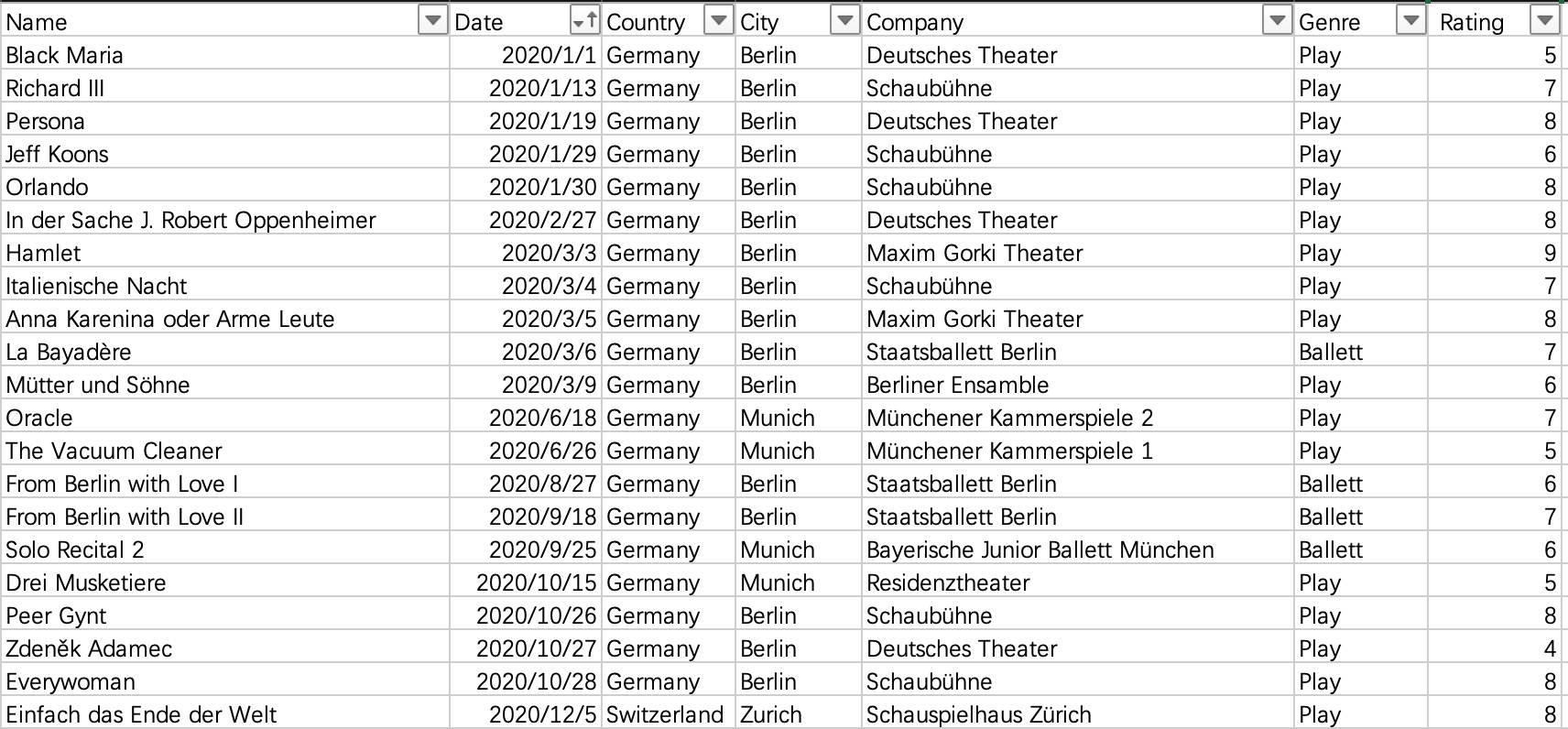
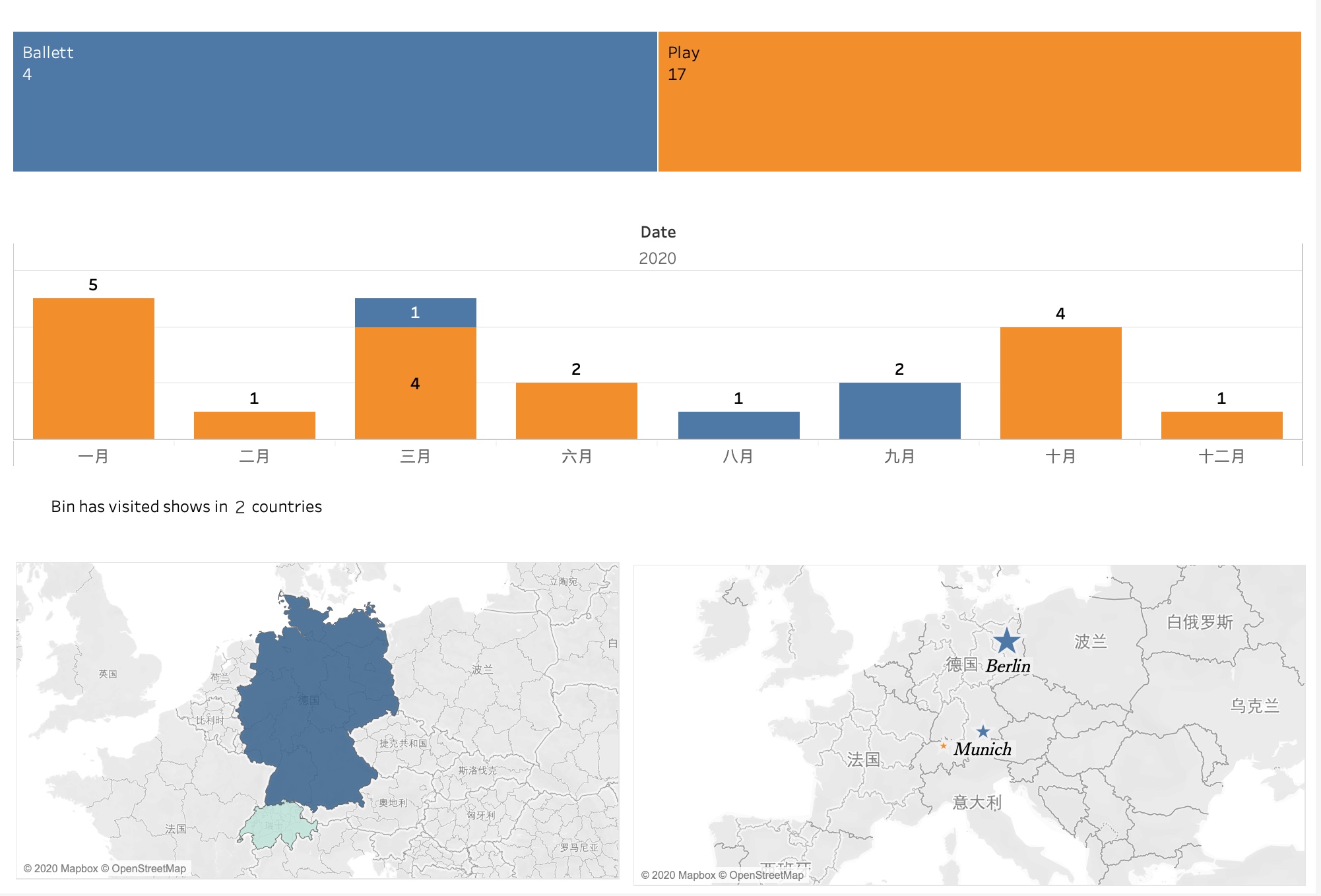
    In summer, the pandemic improved somewhat, and I managed to catch Susanne Kennedy’s “Oracle” in Munich by seizing every opportunity. I also saw “Vacuum Cleaner,” selected for this year’s Berlin Theater Festival, and made three trips back to Berlin to watch two ballets and three plays. The ballets were special performances by the Berlin company prepared during the pandemic: “From Berlin with Love”. The three plays were the new work “Zdeněk Adamec” by Nobel laureate Peter Handke staged at the Deutsches Theater, plus two solo shows at Schlosspark Theater — Lars Edinger starring in “Peer Gynt” and Milo Rau’s “Everywoman.” Afterwards, I went to Switzerland, the toughest country in Europe regarding restrictions, to watch Rüping’s new work “Just at the End of the World.”

    Traveling around, almost every time I finished watching a show there was a lockdown. Two days after watching a show on March 9, Germany officially entered lockdown. After finishing shows in Berlin on October 28, the second lockdown began. The stubborn Zurich closed theaters three days after I returned…

    I saw 21 performances throughout the year, and watched over a dozen plays sporadically online, but really couldn’t find much interest.


    The best of the year was admittedly a bit weak. Surprisingly, the highest score I found was the “Hamlet” (9 points) I watched at the Grips Theater in Berlin at the beginning of the year. The format was super innovative, and every detail opened my eyes. After the pandemic, they also released an online version. Comparing it to the many 10-point plays I watched last year is really…


    Since I couldn’t enter theaters, I had to stay home and read books. I read a Chinese script of “A Doll’s House” and a bunch of miscellaneous foreign books related to theater.

    “Ferryman” is a play I saw on Broadway in 2018, and it was also the Best Play at the Tony Awards that year. Revisiting the script, the plot still remains vivid in my mind.

    “Theatermusik” is a book by a professor at a neighboring school; a book review can be found here.

    “Razzle Dazzle” is written by Michael Riedel, a theater columnist for the New York Post, chronicling the rise and fall of Broadway from the 1960s to the early 21st century. It’s also a chronicle of the theater giant Shubert Organization (Why called a giant? See how many theaters they own in New York…)

    Well… outlook for next year: watch plays when there are plays, read books when there aren’t.

  • The Peak of Public Opinion in Female Stand-Up Comedy – “London Life,” Yang Li, Ali Wong, and Norah

    The Peak of Public Opinion in Female Stand-Up Comedy – “London Life,” Yang Li, Ali Wong, and Norah

    Female Stand-Up Comedy at the Pinnacle of Public Opinion – “London Life,” Yang Li, Ali Wong, and Norah

    Whenever I see “comedy” at the theater, I want to run away

    Having watched countless plays, the number of times I can count as true comedy performances on one hand is very few. Most of the time, it’s clear that actors are trying to be funny but fail, resulting in awkwardness both on and off stage. On another level, even if sitting next to the audience, whether it’s true comedy or not, sometimes viewers can laugh at moments the director planted as bitter humor in tragedies. Whenever this happens, as someone immersed in the plot, I feel helpless and disappointed for them.

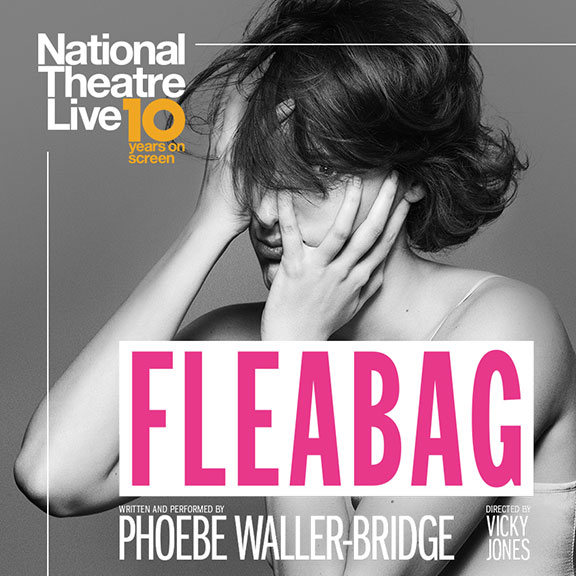
    London Life, Phoebe

    I’ve watched dozens of NT Live performances, and “London Life” is the only one that I had access to but didn’t want to add to my collection. When I first saw the unanimous praise online, I was excited, but after watching it, I was filled with questions. Unlike “Hangman,” which had a strong accent, I understood most of the references here, but still couldn’t figure out what was actually funny. A year and a half later, wanting to write a review, I tried watching again but 15 minutes was really all I could tolerate. Below are all the laugh points from those 15 minutes by the live audience—I didn’t laugh once; instead, the longer I watched, the more serious my expression grew. This is a show I would definitely leave midway through:

      1. Trying to take off the jacket because it’s too hot at the start of the interview
      2. Telling the interviewer, “I’m not trying to sleep with you, look at yourself”
      3. “I ordered a slutty Pizza, the bitch was dripping” — a pun
      4. “I wish the banker could come on me for 10K pounds”
      5. “Zack Efron is a good actor,” “Obama is attractive”
      6. Saying goodnight to boyfriend by the bed after watching porn
      7. Handprints on the wall left during a threesome on her period
      8. Threesome was great
      9. “I spent half an hour doing makeup and it ends up amazing”
      10. “I dress like a slut but can go home and change; the man passing by has a body full of fat he can’t take off at home”

    Among these 10 “laugh points,” there is physical acting, personification, bold descriptions of her sexual fantasies and experiences, as well as body shaming of men. Since this is performed in a theater for effect, naturally it cannot be judged by social norms outside. But what I strongly resent is that except for point 6 with a hidden joke, the rest are very blunt, like an unfiltered emotional outburst. As a male audience member, I was not insulted because of the “male” identity, but rather felt that my “audience” identity was insulted—paying for a ticket only to be force-fed unprocessed garbage.

    In our last podcast episode “Three Sisters”: Why Is a Boring Play Performed Year after Year?, a senior mentioned the concept of “low comedy”: it refers to a dramatic or literary form of popular entertainment with no major objectives besides generating laughter through boasting, loud jokes, drunkenness, swearing, fighting, slapstick, and other rambunctious activities [Encyclopædia Britannica]. “London Life” is a typical low comedy. Low comedy is not appreciated by most of society and looked down upon compared to high comedy. The sole purpose of low comedy is to evoke laughter. Because most forms of low comedy lack any contextual information, they have not earned high respect [B. A. (Jan 21, 1934). “Salute to low comedy”. New York Times.]

    ★★☆☆☆

    Ali Wong, Yang Li, Uncle Roger, and Norah

    As another female low comedy, besides “London Life,” the most popular must be Ali Wong’s Netflix special. Watching their performances elicits similar feelings: “What is this? What’s funny about it? Why is it popular?” The only slight difference might be that Ali Wong, as an Asian woman, leverages Netflix to skyrocket and simultaneously contributes slightly to breaking American Asian stereotypes. If I were to rate and review, it would also be a fail.

    Yang Li, whom I first knew because of her “ordinary yet confident” meme—so good that even someone like me with a timeline cleanliness obsession follows her heavily ad-ridden Weibo. She drops that punchline within the first minute, which felt a bit lacking in buildup at first, but then follows it up with jokes about a dumb person scoring 40 points and “rational women won’t come after you,” making the first three minutes well-structured and surprising. Returning to the most viral recent “Men Have No Bottom Line” video, similarly, no laughs in the first three minutes; it even had “You male viewers are really hard to please” type comments. It makes one wonder if this is just setup for later jokes or genuine complaint? Calling it stand-up, why does it look like a celebrity interview post-fame?

    Another breakout star who rose to fame by reviewing egg fried rice is Uncle Roger. Though not female, he has seriously been led by capital every step of the way. His channel has many videos of Nigel Ng’s live performances as himself, and nearly 100 podcast episodes of “Rice to Meet You.” With various racial jokes, cultural clash bits, audience interactions, and podcast spontaneity, they are top-tier. But since the egg fried rice video made him three million subscribers, he keeps recycling the same old Uncle Roger stereotypical Asian uncle skit. It’s annoying enough to make me unsubscribe, but I’m still glad talented people can make money.

    So who’s actually good?


    Norah, don’t ask, just search!
    In the show “So-so” with those four foreigners, Norah was purely awkward acting, but who would have thought years later she blossomed so impressively! Apart from the Rainbow Chorus, she’s the Shanghai performer I most want to see!

  • “The Three Sisters”: Why Is a Boring Play Performed Every Year?

    “The Three Sisters”: Why Is a Boring Play Performed Every Year?

    “Three Sisters”: Why is a Boring Play Performed Year After Year?

    “Moon Never Sets on Theater” A cultural and artistic podcast jointly produced by theater practitioners spanning three continents and five time zones

    Guests This Episode 

    “TheatreManiac” Sun Bin

    “Slothful Body” San Feng

    “@ph Senior” ph Senior

    “Archipel Islands” Aperture

     Listening Guide 

     01’30” Summary of the story of Three Sisters

    03’40” Is “Three Sisters” really boring?

    08’25” Static Drama and Fragmented Drama

    17’20” Did Chekhov consider this a comedy?

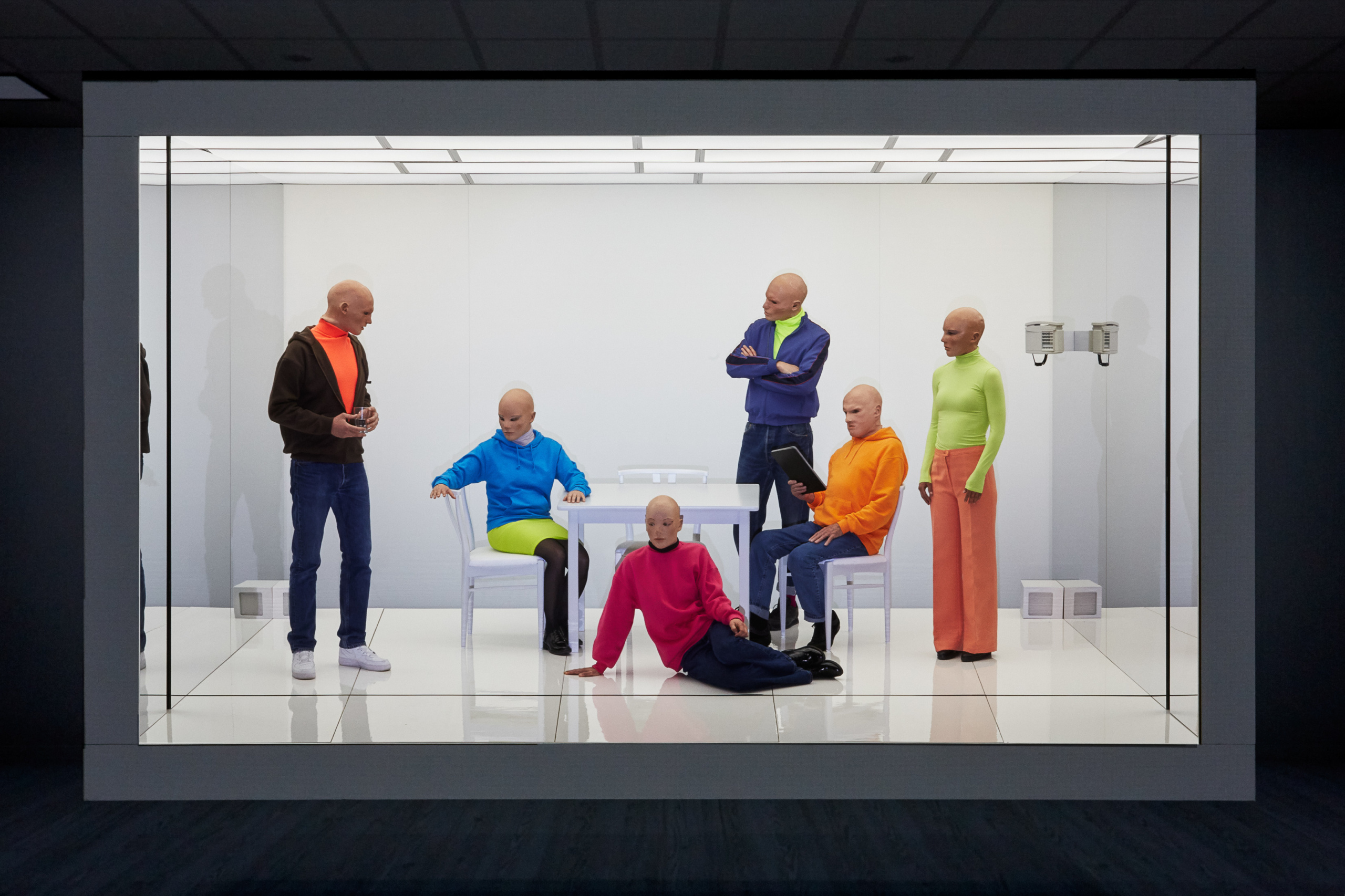
     24’30” Munich Kammerspiele Susanna Kennedy’s Posthuman Version of “Three Sisters”

    35’05” Lin Zhaohua’s Version of “Three Sisters – Waiting for Godot”

     Photo and Text Index 

    Trailer of Munich Kammerspiele’s “Three Sisters”

    Production Stills

    Production still from “Three Sisters – Waiting for Godot”

     Other Recommendations 

    As a play that is performed almost every year with multiple shows, “Three Sisters” can be watched through many online channels. Besides the two versions introduced in this episode, the Inua Ellams version by the UK’s National Theater is highly recommended. This production can be viewed on the recently launched NT streaming service, NT at Home.

    – Find   Us  –